



 The Quiet Cabinet

Noctua fimbriata
Broad-bordered Yellow Underwing: orange hidden beneath
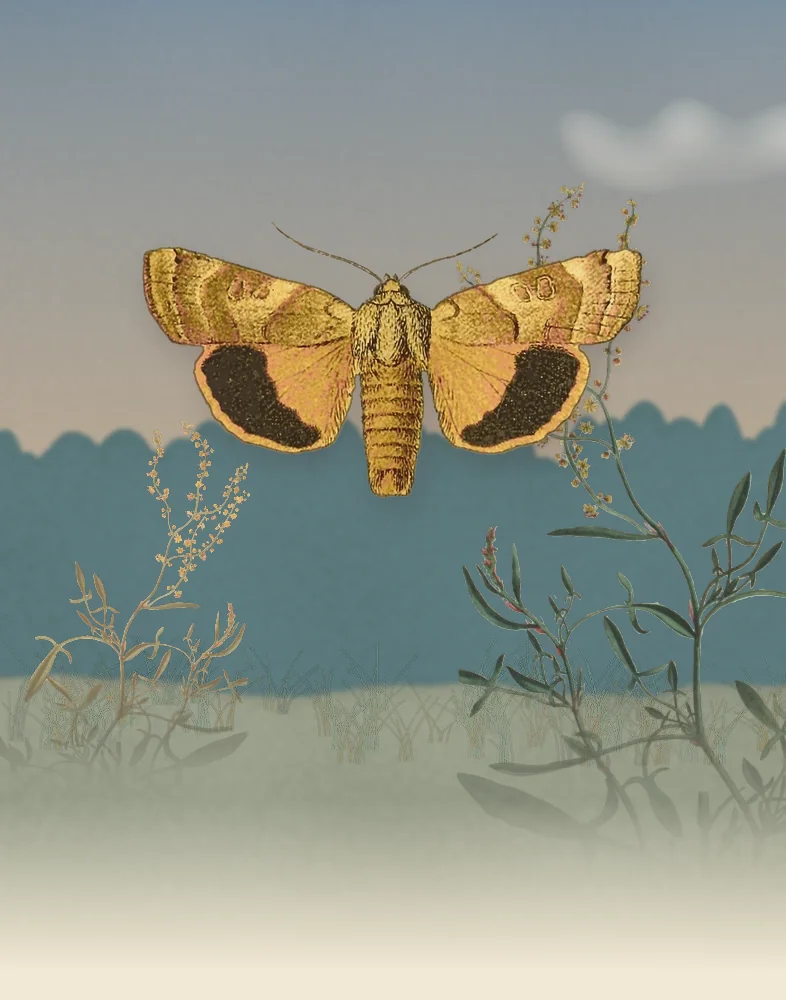
At rest, the Broad-bordered Yellow Underwing is a modest brown moth, its forewings folded flat over its back. Then it flies, and suddenly it is bright orange: the hindwings, hidden until now, are orange with a broad black border.
How to recognise it
- Size: a wingspan of about 45 to 55 millimetres.
- The hindwings: orange, with a very broad black border, the "broad border" of its name, seen only in flight.
- The sexes differ: the males are darker, red-brown or olive-green, with stronger markings; the females paler, ochre or orangey-buff. Several named forms exist, among them a dark olive-green male and one with blackish forewings.
When and where to see it
It has one generation a year, flying in late summer, from July to September, and into October. It's found throughout most of Britain, less often in Scotland, in almost any habitat, though it seems most at home in woodland. Its range runs across Europe to the Caucasus and western Siberia.
Its caterpillar
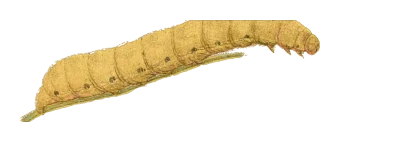
The caterpillar is reddish ochre with brown spots and a pale line along its back. It feeds on a wide range of low plants and shrubs, among them cowslip and dandelion, and spends the winter as a caterpillar.
The plate it comes from
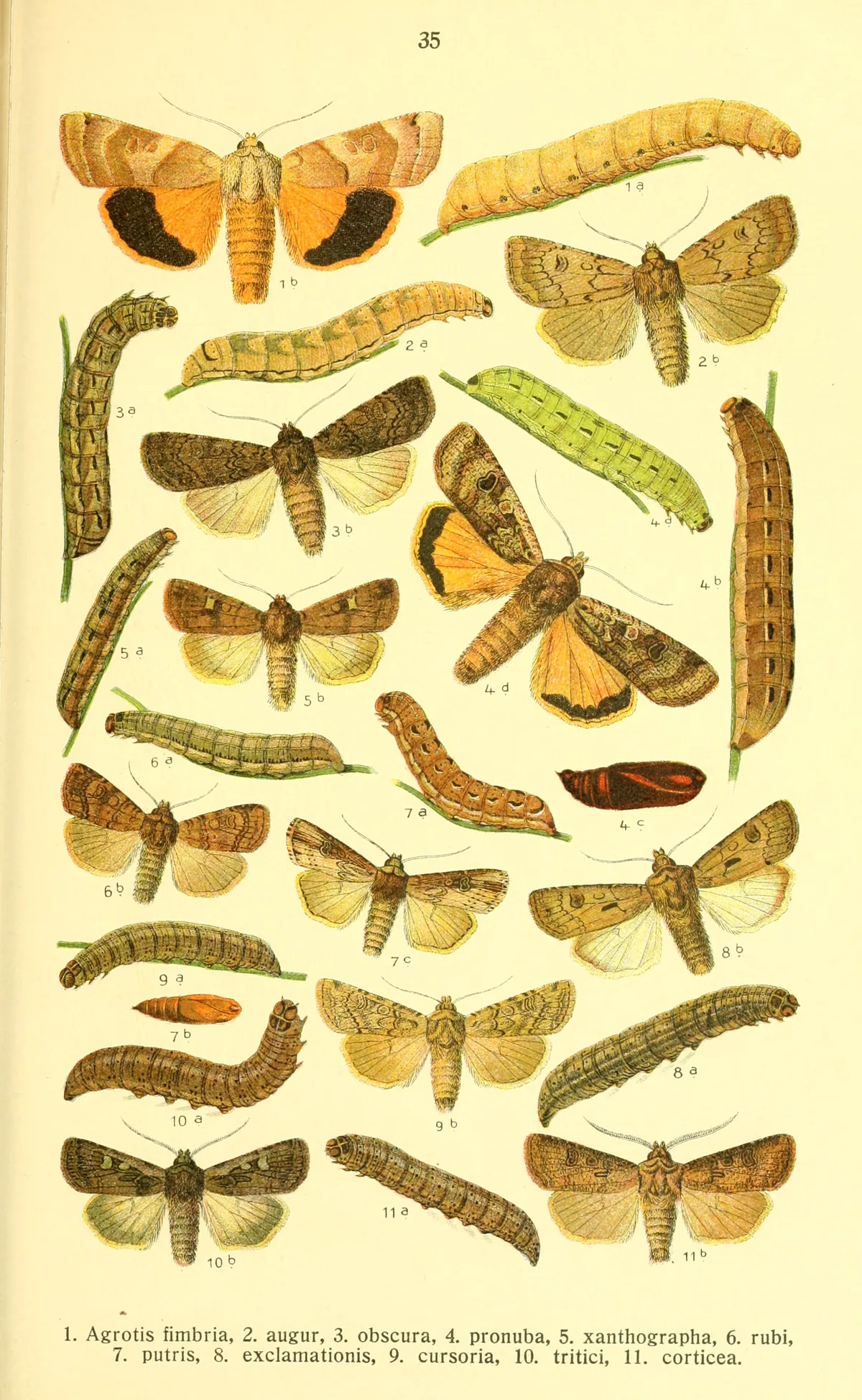
The Broad-bordered Yellow Underwing in The Quiet Cabinet is figure 1b of this plate. On its Field Guide page it flies above sheep's sorrel at a woodland edge at dusk.
In The Quiet Cabinet
It's one of the thirteen species of the Night Wing, the game's fourth chapter, part of the Butterfly Collection. When its case is completed, a marimba joins the plate's music.
Sources
- UKMoths, Broad-bordered Yellow Underwing
- Wikipedia, Noctua fimbriata
More from the journal

Black-veined White: the butterfly Britain lost
A large white butterfly with black veins, lost from Britain around 1925 for reasons still unknown. Its story, its caterpillars' silk nests, its strange female.

Buff-tip moth: the moth that looks like a broken twig
A moth that rests looking just like a snapped birch twig, whose yellow-and-black caterpillars feed in crowds and strip branches bare. How to know the Buff-tip.
Chalkhill Blue butterfly: the silver-blue of the chalk downs
A milky silver-blue butterfly found only on chalk and limestone downs, whose caterpillar eats one plant and is tended by ants. How to know it and where to see it.