



 The Quiet Cabinet

Notes from the naturalist’s desk
Journal
The butterflies and moths of the Field Guide, one at a time, and a few notes on how the game was made.
From the Field Guide

Black-veined White: the butterfly Britain lost
Aporia crataegi
A large white butterfly with black veins, lost from Britain around 1925 for reasons still unknown. Its story, its caterpillars' silk nests, its strange female.

Broad-bordered Yellow Underwing: orange hidden beneath
Noctua fimbriata
A brown late-summer moth that hides bright orange hindwings with a broad black border, showing them only in flight. How to know it, and its many forms.

Buff-tip moth: the moth that looks like a broken twig
Phalera bucephala
A moth that rests looking just like a snapped birch twig, whose yellow-and-black caterpillars feed in crowds and strip branches bare. How to know the Buff-tip.
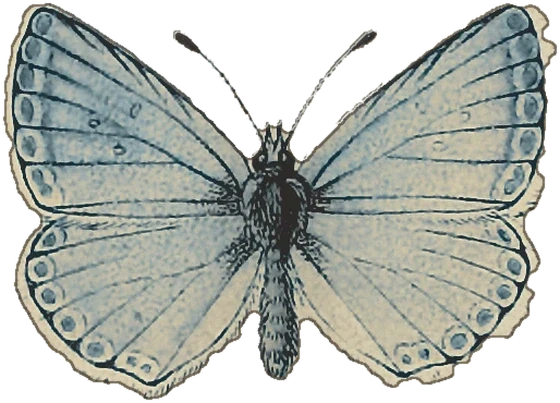
Chalkhill Blue butterfly: the silver-blue of the chalk downs
Polyommatus coridon
A milky silver-blue butterfly found only on chalk and limestone downs, whose caterpillar eats one plant and is tended by ants. How to know it and where to see it.
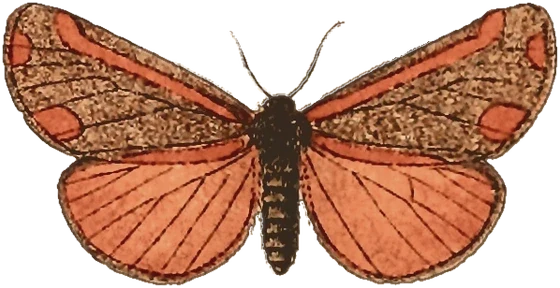
Cinnabar moth: the red moth and its striped caterpillars
Tyria jacobaeae
A black and crimson moth named after a red mineral, whose yellow-and-black caterpillars strip ragwort bare and carry its poison. How to know it and when to see it.
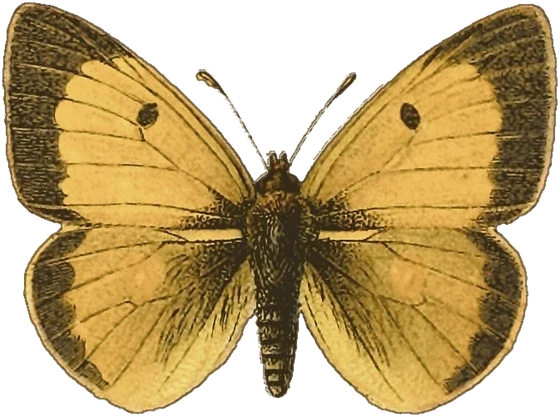
Clouded Yellow butterfly: the golden migrant of summer
Colias croceus
A golden butterfly that flies to Britain from southern Europe and North Africa each summer, in some years by the thousand. How to know it, and when to see it.
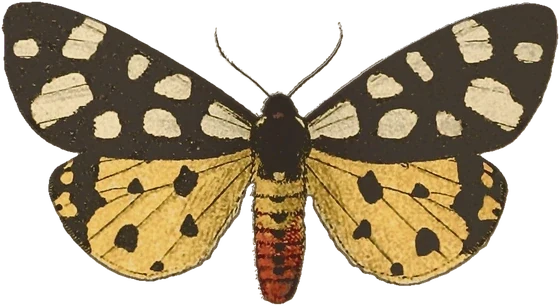
Cream-spot Tiger: the moth of clifftops and dunes
Arctia villica
A tiger moth with black forewings spotted cream, which flashes bright hindwings and an orange body as a warning. How to know it, and its woolly caterpillar.
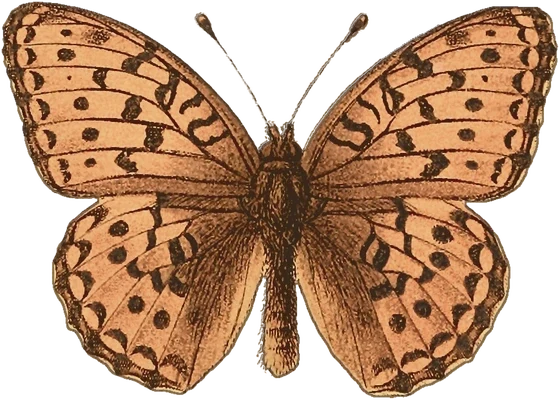
Dark Green Fritillary: the powerful flier of the downs
Speyeria aglaja
A large orange fritillary that races over windswept downs, named for the green and silver beneath its wings. Its caterpillar eats violets. How to know it.
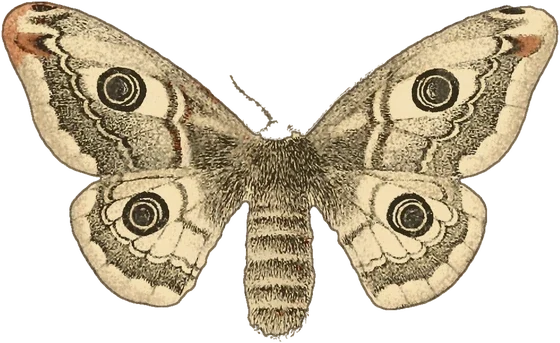
Emperor Moth: Britain's only silk moth
Saturnia pavonia
A spectacular eyed moth of heaths and moors, Britain's only silk moth, whose males race across the heather by day in spring. How to know the Emperor Moth.
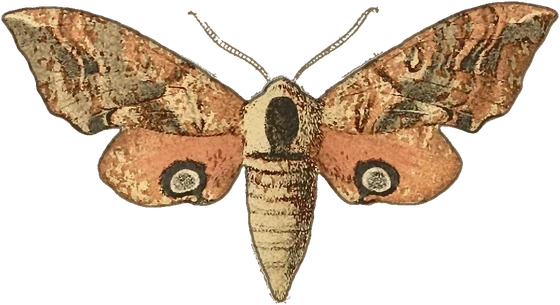
Eyed Hawk-moth: the moth that flashes two blue eyes
Smerinthus ocellata
A bark-brown hawk-moth that, disturbed, shows rose hindwings with a big blue-and-black eye on each. How to know the Eyed Hawk-moth, and its caterpillar on sallow.
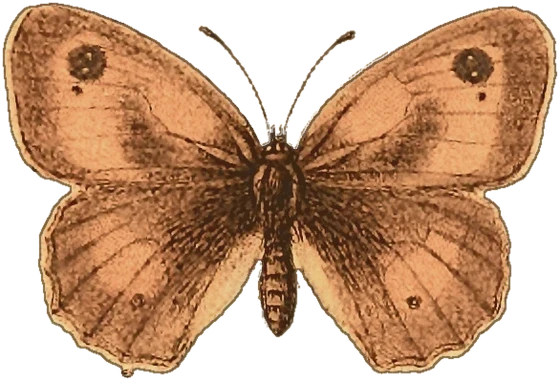
Gatekeeper butterfly: the Hedge Brown of high summer
Pyronia tithonus
A small orange and brown butterfly of hedges and field gates, found at bramble flowers in high summer. How to tell it from the Meadow Brown, and where to see it.
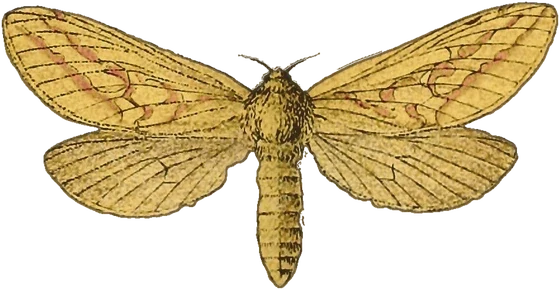
Ghost Moth: the white males that dance at dusk
Hepialus humuli
A moth whose white males hover and sway over the grass at dusk to draw the females, and whose caterpillars live underground on roots. How to see the Ghost Moth.
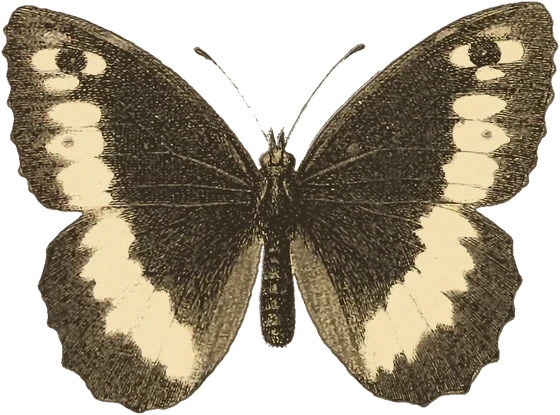
Great Banded Grayling: the butterfly that hides on bark
Brintesia circe
A big black-and-white butterfly of southern Europe's light woods that rests on tree trunks, its marbled underside matching the bark. How to know it.
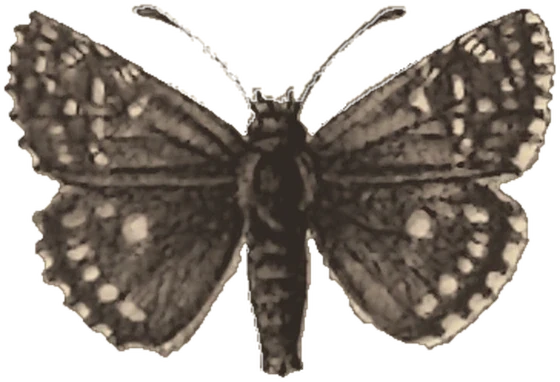
Grizzled Skipper: the tiny chequered skipper of spring
Pyrgus malvae
A tiny chequered skipper that buzzes low over short turf in spring, whose chrysalis waits nine months. How to know it, where to find it, why it is Vulnerable.
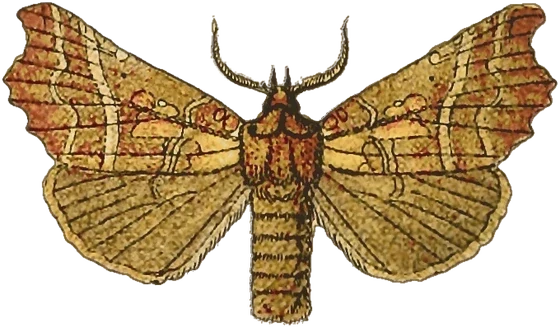
Herald moth: the leaf-like moth that winters in caves
Scoliopteryx libatrix
A moth like a dead leaf glowing with orange, which sleeps the winter in caves and barns, among the last moths of one year and the first of the next. How to know it.
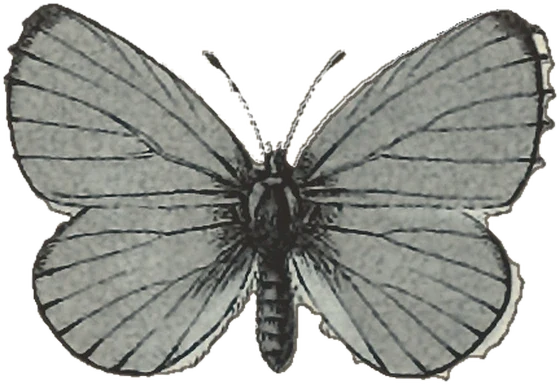
Holly Blue butterfly: the blue of gardens, holly and ivy
Celastrina argiolus
The first blue of spring, flying high round bushes and trees; its spring caterpillars eat holly and summer ones ivy. How to know it, and why its numbers rise and fall.
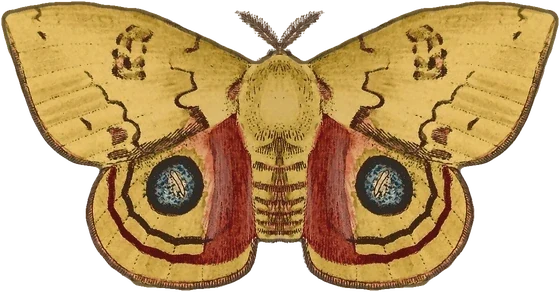
Io Moth: two great eyes and a stinging caterpillar
Automeris io
A North American moth that flashes a huge eye on each hindwing when disturbed; the male is yellow, the female red-brown, and its caterpillar stings. How to know it.
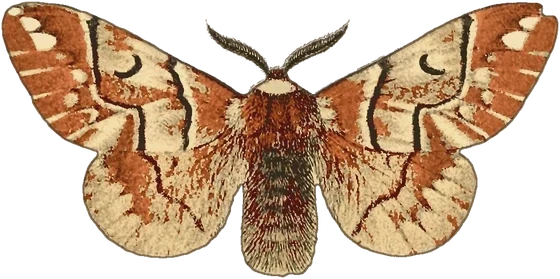
Kentish Glory moth: named for Kent, now in the Highlands
Endromis versicolora
A large spring moth of birch woods, named after Kent where it once flew, now found in Britain almost only in the Scottish Highlands. How to know the Kentish Glory.
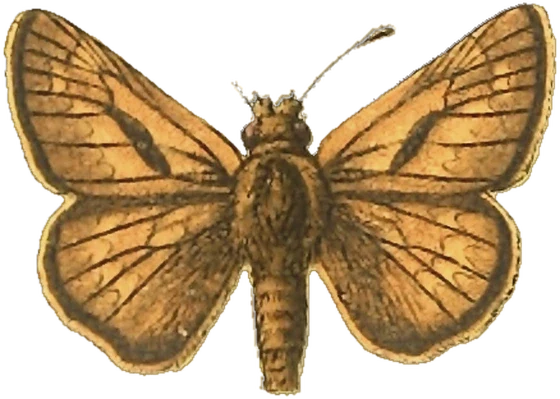
Large Skipper butterfly: the little moth-like guardian
Ochlodes sylvanus
A quick orange skipper whose male waits on a sunny leaf and darts at whatever passes, and whose caterpillar flicks its droppings away. How to know it.
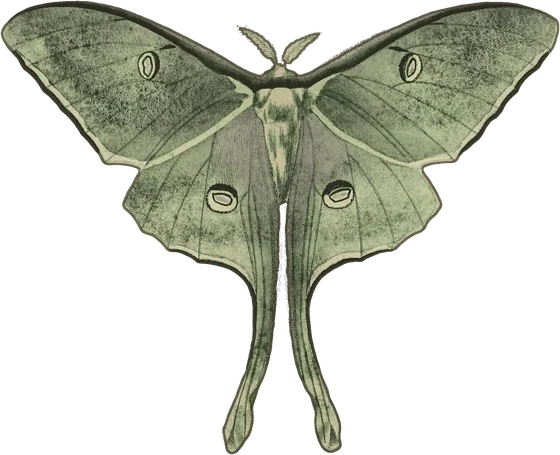
Luna Moth: the pale green moon moth of North America
Actias luna
A lime-green moth with long tails that confuse hunting bats, which never eats and lives about a week. How to know the Luna Moth, and its caterpillar on walnut and sweet gum.
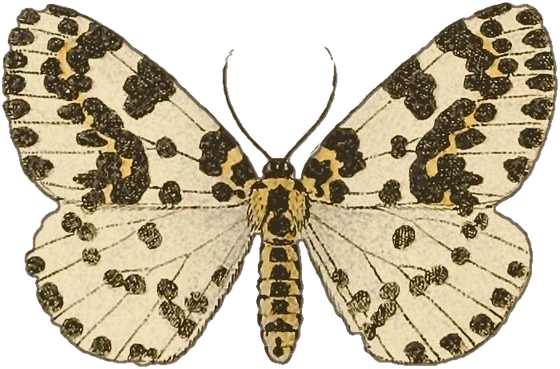
Magpie moth: black, white and yellow, inside and out
Abraxas grossulariata
A boldly spotted moth whose caterpillar wears the same colours and eats gooseberry and currant, a favourite of early collectors for its many forms. How to know it.
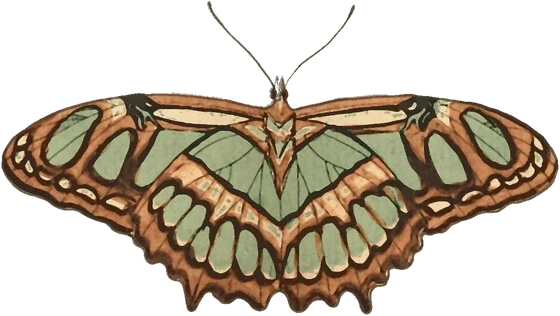
Malachite butterfly: green as the stone it's named for
Siproeta stelenes
A tropical butterfly of black and brilliant green, named for the stone malachite, ranging from Brazil to Florida and Texas. Its golden-spined chrysalis, and more.
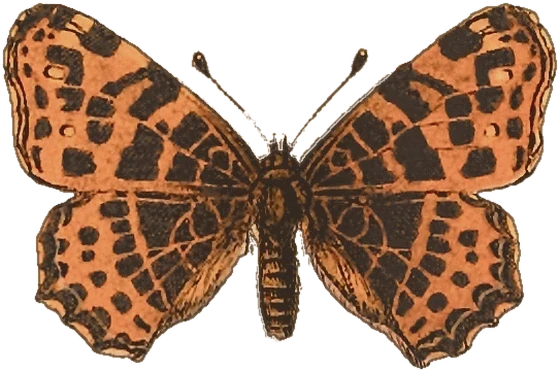
Map butterfly: orange in spring, black in summer
Araschnia levana
A European butterfly whose spring and summer broods look like two species, and whose eggs hang in towers under nettle leaves. Why the Map never settled in Britain.
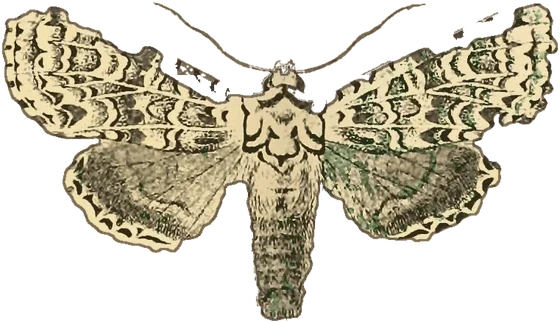
Merveille du Jour: the green autumn moth of the oaks
Griposia aprilina
A moth of lichen green and velvety black, the "marvel of the day", that rests unseen on oak bark in October. How to know it, and its caterpillar hidden in oak buds.
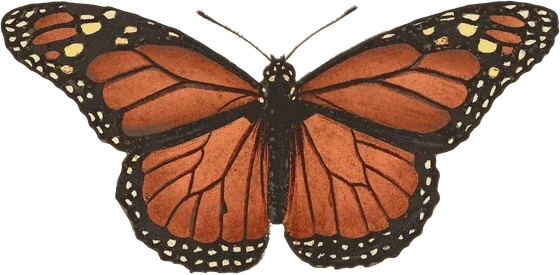
Monarch butterfly: the long journey to Mexico's fir forests
Danaus plexippus
The orange-and-black butterfly that flies thousands of kilometres to a few fir forests in Mexico each autumn, made poisonous by milkweed. Its migration and decline.
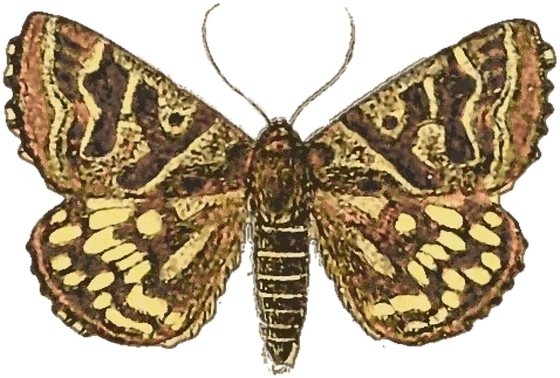
Mother Shipton moth: the witch's face on its wings
Euclidia mi
A day-flying moth whose wings carry the profile of a Yorkshire witch, flitting between meadow flowers in May and June. How to know it and where to see it.
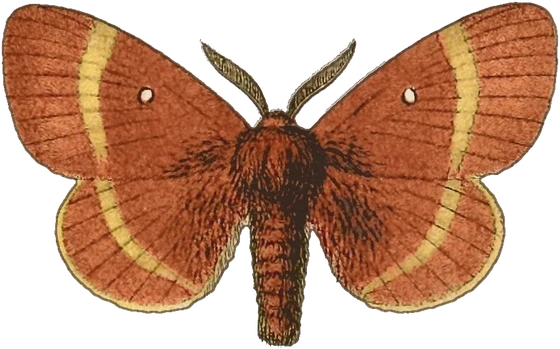
Oak Eggar moth: named for its acorn, not the oak
Lasiocampa quercus
A big furry moth of heaths and moors that doesn't feed on oak at all, named for its acorn-shaped cocoon, whose males race about by day. How to know the Oak Eggar.
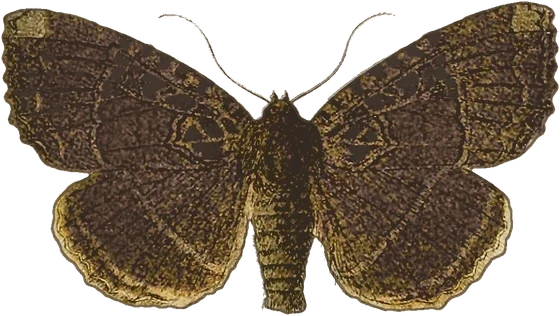
Old Lady moth: the big dark moth in the shawl
Mormo maura
A large, sombre moth named for wings like a Victorian lady's shawl, which hides by day in old buildings and sheds. How to know the Old Lady, and when to see it.
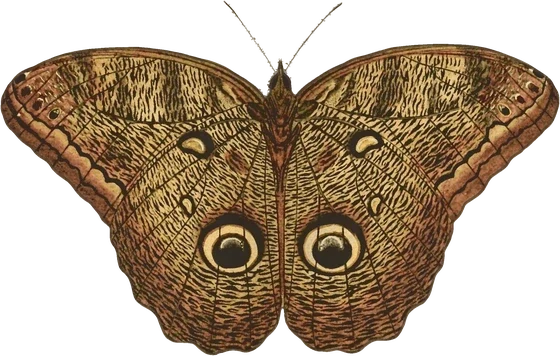
Owl Butterfly: the great eyes of the dusk
Caligo eurilochus
A giant butterfly of the tropical Americas with a huge owl-like eye beneath each hindwing, which flies at dusk and feeds on fermenting fruit. How to know it.
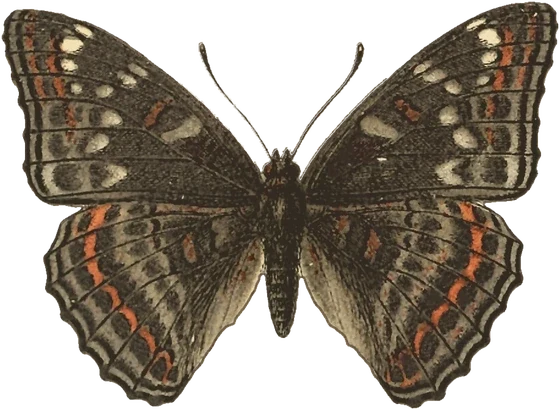
Poplar Admiral: the great butterfly of Europe's aspen woods
Limenitis populi
A big, rare butterfly of Europe's old aspen forests, whose males come down to dung and damp ground. How to know the Poplar Admiral, and why it has grown rare.
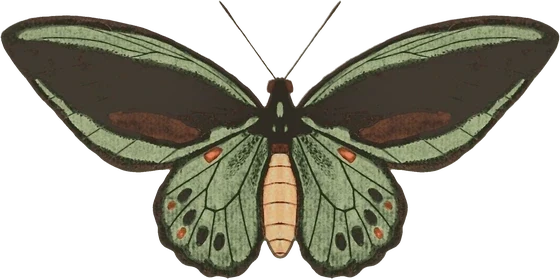
Priam's Birdwing: the green birdwing named for a king
Ornithoptera priamus
A huge birdwing of New Guinea and north-east Australia: the male velvet black and shining green, the female larger and brown. Why it is traded only under permit.
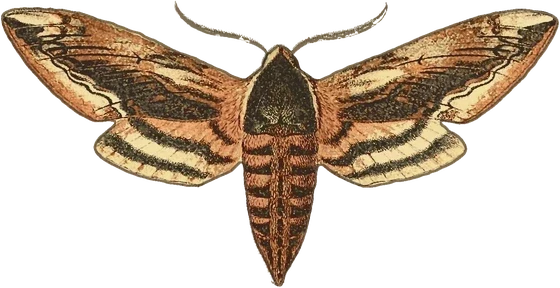
Privet Hawk-moth: Britain's largest resident hawk-moth
Sphinx ligustri
A huge night moth with a pink-and-black striped body, whose green caterpillar has lilac stripes and a curved horn. How to know the Privet Hawk-moth and find it.
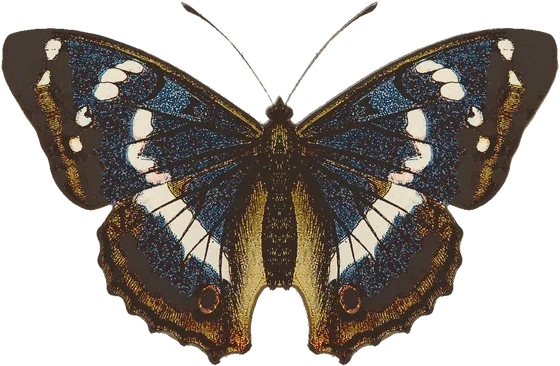
Purple Emperor: the elusive emperor of the treetops
Apatura iris
An elusive butterfly of England's great woods whose male flashes purple in the light, lives high in the canopy and comes down for salts. How to find the Purple Emperor.
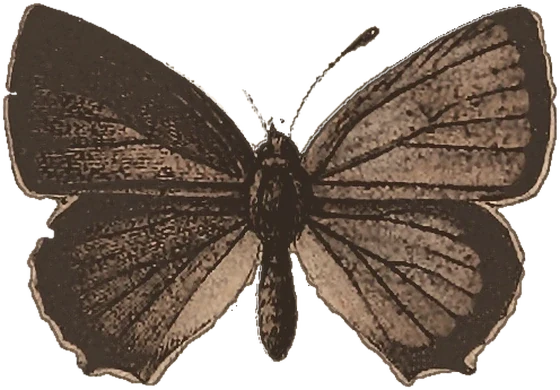
Purple Hairstreak: the butterfly in the tops of the oaks
Favonius quercus
A purple-sheened butterfly that lives high in the oaks, sipping honeydew, and dances round the treetops on warm July evenings. How to see the Purple Hairstreak.
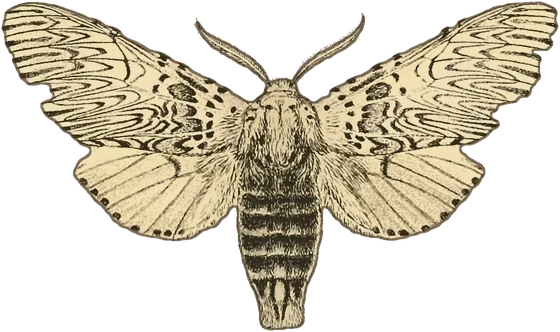
Puss Moth: a furry moth and its fierce caterpillar
Cerura vinula
A soft, cat-like moth whose green caterpillar rears up, waves two whip-like tails and can squirt formic acid. How to know the Puss Moth, and its cocoon of chewed wood.
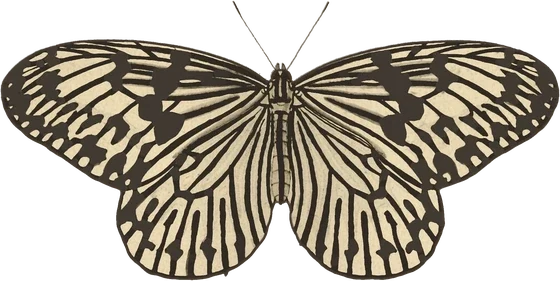
Rice Paper Butterfly: the Monarch's papery cousin
Idea idea
A large, papery white butterfly veined in black, found only in the Moluccas, a cousin of the Monarch whose name is the same word twice. How to know it.
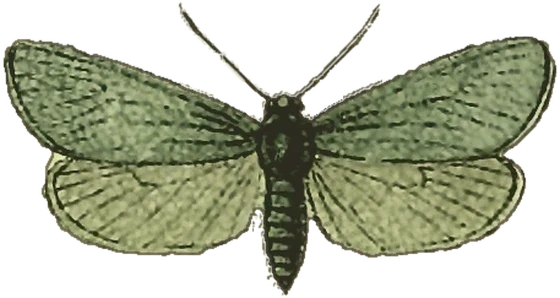
Scarce Forester: the shining green moth of the chalk
Jordanita globulariae
A small moth of shining green that flies by day over a few English chalk downs, whose caterpillar mines knapweed leaves. How to know it and where it lives.
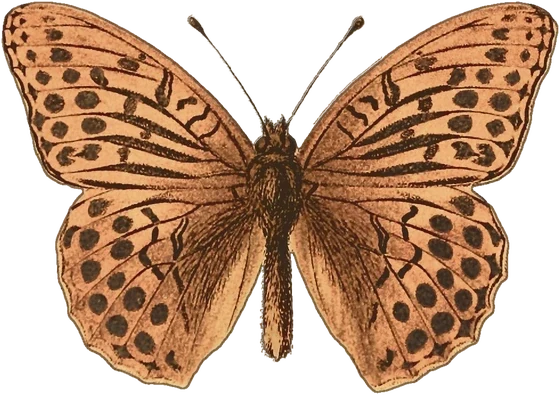
Silver-washed Fritillary: Britain's largest fritillary
Argynnis paphia
A big, fast orange butterfly of sunny oakwood rides, named for the silver beneath its wings, which lays its eggs in tree bark. How to know it, and its green form.
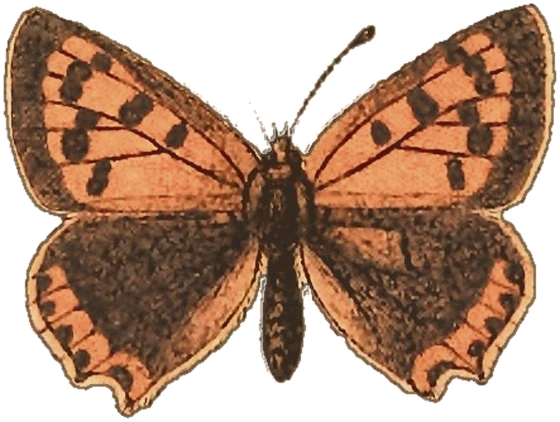
Small Copper butterfly: a bright, fierce little copper
Lycaena phlaeas
A tiny gleaming copper butterfly whose male guards a sunny patch of ground and chases off whatever passes. How to know it, and what its caterpillar eats.
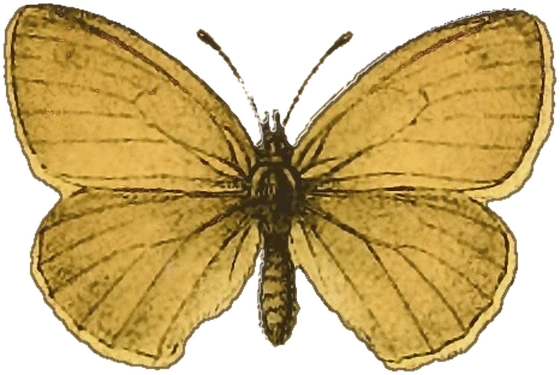
Small Heath butterfly: the smallest of the browns
Coenonympha pamphilus
A small sandy-orange butterfly that flutters low over short grass and always rests with its wings closed. How to know the Small Heath, and why it is Vulnerable.
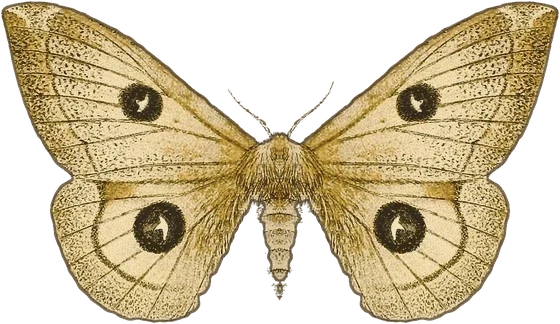
Tau Emperor moth: the T in the eyespots of the beechwoods
Aglia tau
A large spring moth of Europe's beechwoods, named for the T in each eyespot, which has no mouth and lives only to breed. How to know the Tau Emperor and where it flies.
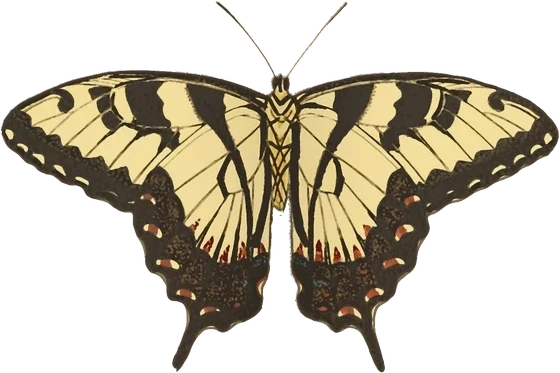
Tiger Swallowtail: the first American butterfly ever drawn
Papilio glaucus
A big yellow swallowtail with tiger stripes, the first North American butterfly ever drawn, in 1587; some females are almost black. How to know it, and where.
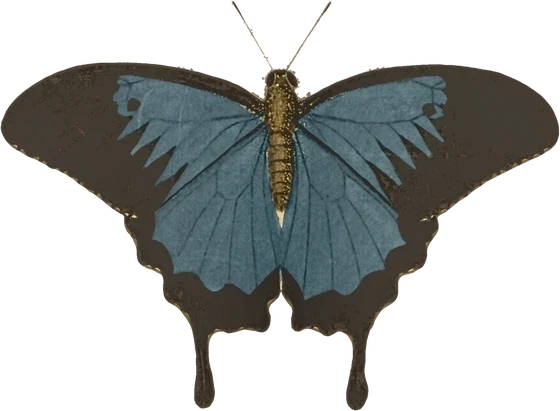
Ulysses Swallowtail: the electric-blue swallowtail
Papilio ulysses
A big swallowtail of north Queensland and the Pacific islands whose blue is made of light, not pigment, and whose males chase anything blue. How to know the Ulysses.
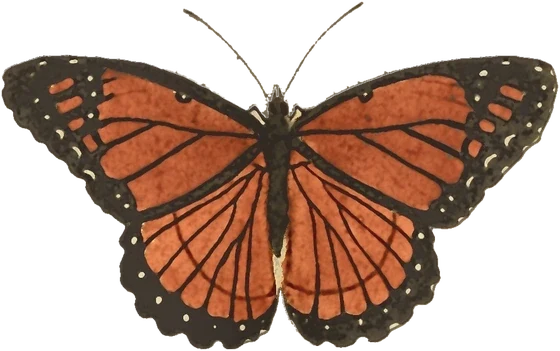
Viceroy butterfly: the Monarch's look-alike, and partner
Limenitis archippus
An orange-and-black butterfly like a small Monarch, with a black line across each hindwing. Why both taste bad to birds, and how each look-alike protects the other.
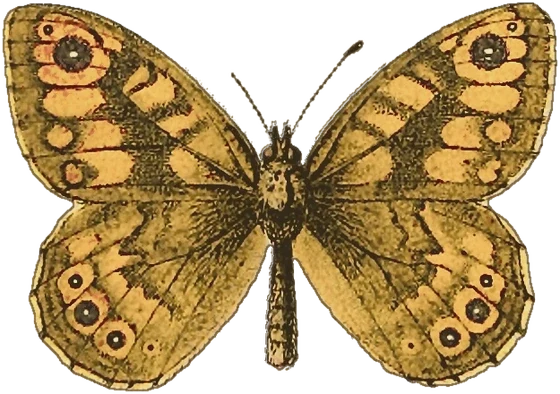
Wall butterfly: the brown that basks on walls and stones
Lasiommata megera
An orange-brown butterfly that basks on walls, rocks and bare ground, still widespread by the coast but now Endangered after vanishing from much of inland Britain.
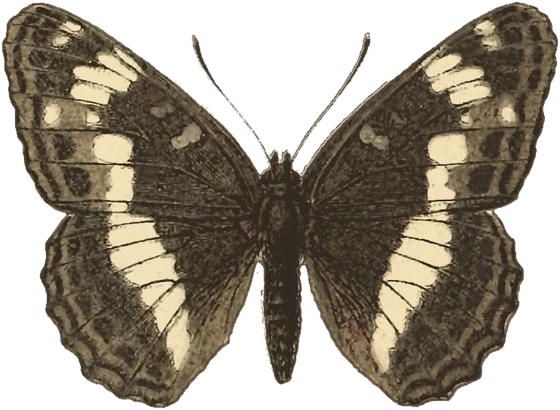
White Admiral butterfly: the glider of shady woods
Limenitis camilla
A black and white butterfly that glides through shady woods, whose caterpillar eats only honeysuckle and winters in a leaf it folds itself. How to know it.
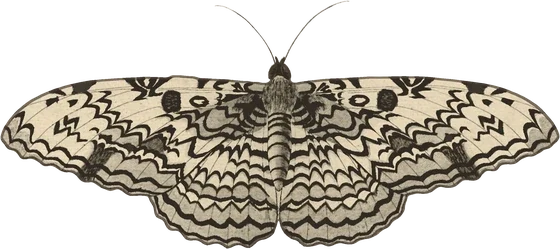
White Witch moth: the widest wings of any moth
Thysania agrippina
A tropical American moth with wings up to about 30 centimetres across, the widest of any moth, whose caterpillar went undescribed until 2025. How to know it.
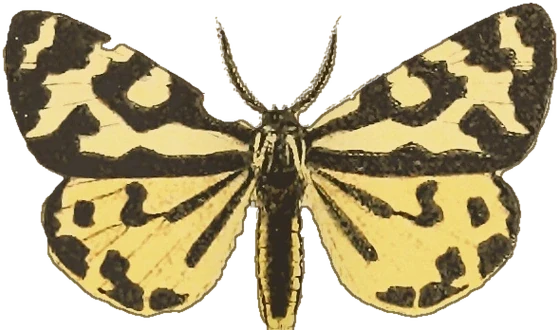
Wood Tiger moth: black and cream, with a red-winged female
Arctia plantaginis
A black and cream tiger moth of heaths and moors, whose males fly in sunshine while the red-winged females wait for dusk. How to know it and when to see it.
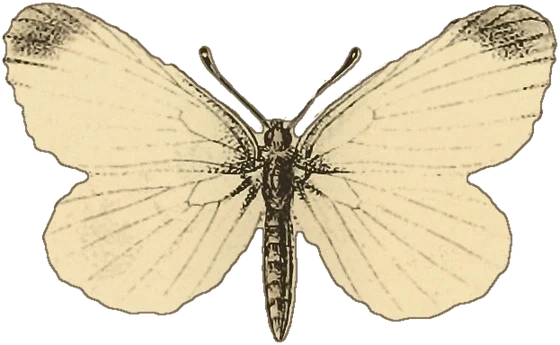
Wood White butterfly: the delicate white of woodland rides
Leptidea sinapis
A small, slow, round-winged white of sheltered woodland rides, whose males court face to face. How to know the Wood White, and why it is Endangered in Britain.
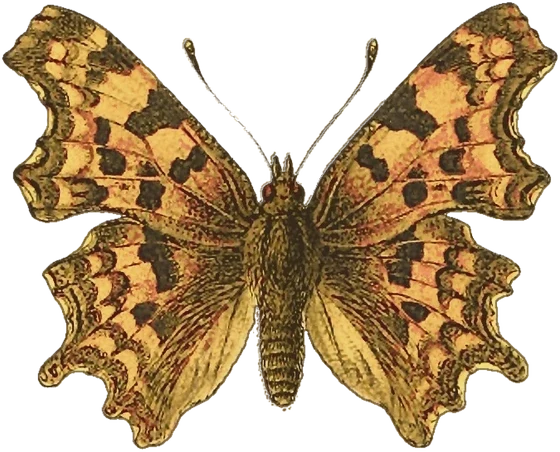
Comma butterfly: the white mark, summer form and comeback
Polygonia c-album
A ragged orange butterfly named for one small white mark, which nearly vanished from Britain and came back. Its pale summer form, and its caterpillar.
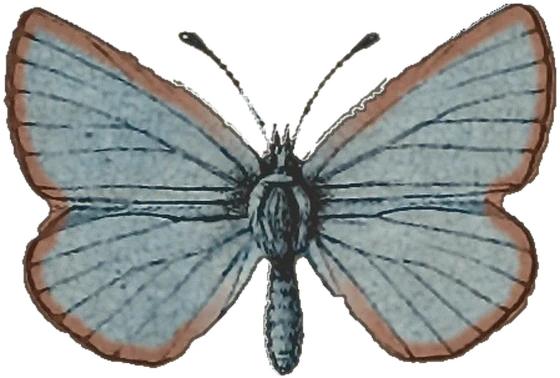
Common Blue butterfly: male, female, caterpillar and ants
Polyommatus icarus
The commonest blue of Britain and Ireland: the female is brown in the south and blue in the north, and ants tend the caterpillar. How to know it, where to find it.
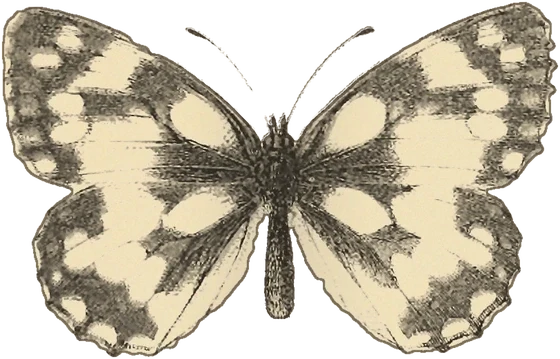
Marbled White butterfly: the white that is really a brown
Melanargia galathea
A chequered black and white butterfly of high summer grassland, kin to the browns, which drops its eggs into the grass. How to know it and where to see it.
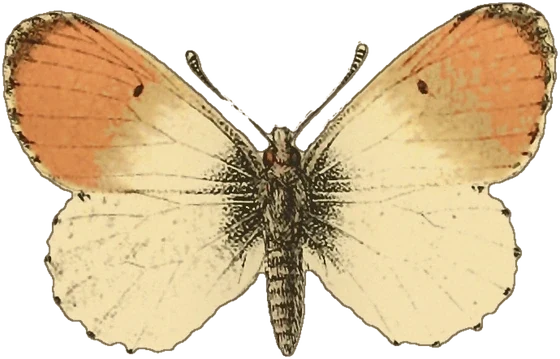
Orange-tip butterfly: male, female, egg and caterpillar
Anthocharis cardamines
The butterfly of spring lanes: only the male has orange tips, the egg turns orange too, and it spends about eleven months as a chrysalis. How to know it.
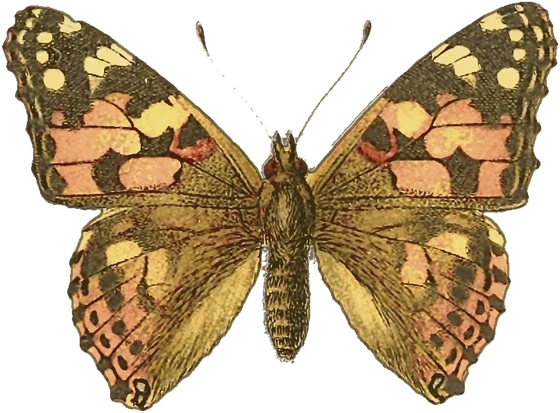
Painted Lady butterfly: migration, facts and caterpillar
Vanessa cardui
The world's most widespread butterfly flies north from the desert's edge each spring, over many generations. Where it comes from, and what its caterpillar eats.
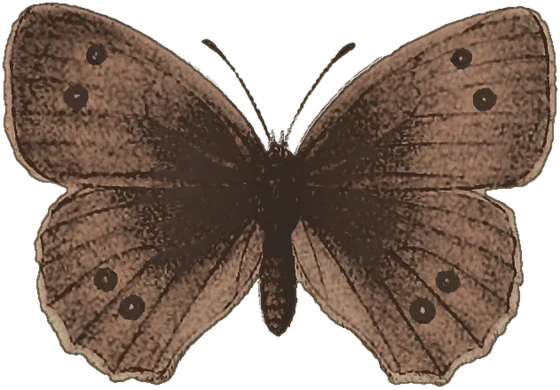
Ringlet butterfly: the brown that flies on cloudy days
Aphantopus hyperantus
A dark, velvety brown butterfly named for the rings beneath its wings, which keeps flying when the sun goes in. How to know it, and its grass-eating caterpillar.
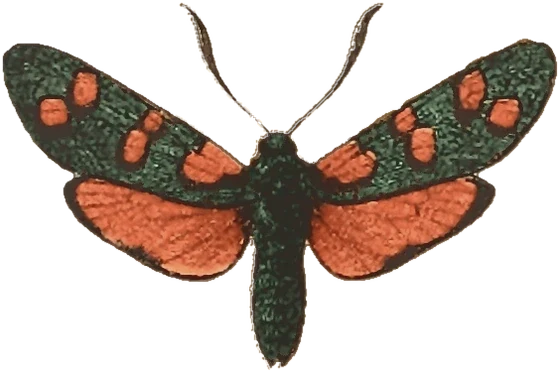
Six-spot Burnet: the red-spotted moth that flies by day
Zygaena filipendulae
A glossy green-black moth with six red spots, flying slowly over summer meadows in full sun, poisonous at every stage of its life. How to know it, and its cocoon.
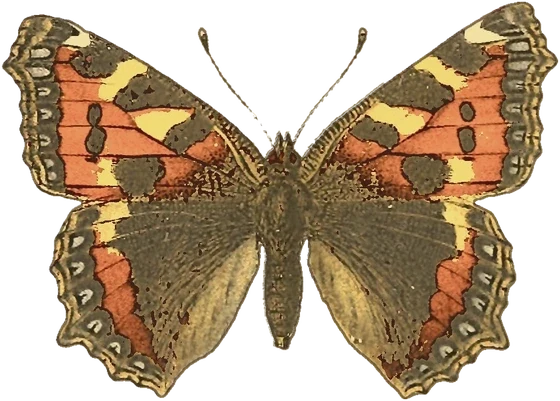
Small Tortoiseshell butterfly: nettles and winter sleep
Aglais urticae
One of spring's first butterflies, asleep all winter in sheds, its caterpillars in silk tents on nettles. How to know it, and why it has grown scarcer.
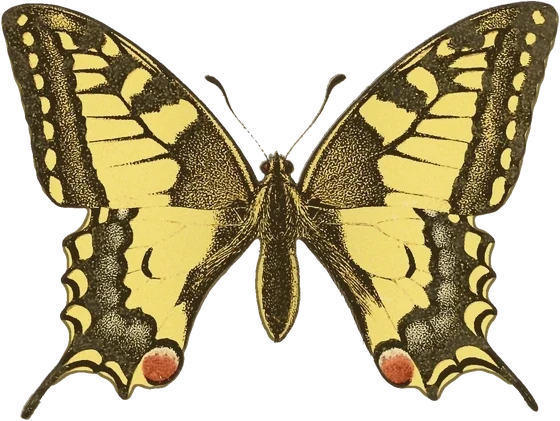
Swallowtail butterfly: Britain's largest, in the Broads
Papilio machaon
Britain's largest native butterfly lives only in the Norfolk Broads, where its caterpillar eats one plant. How to know it, when to see it, and its caterpillar.
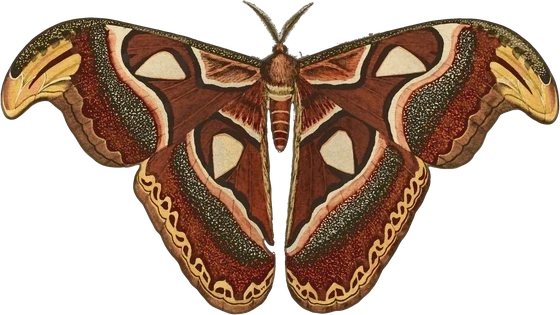
Atlas moth: facts about one of the world's largest moths
Attacus atlas
A moth up to 30 centimetres across, with wingtips like snakes' heads and no mouth to eat with. Where the Atlas moth lives, how long it lives, and its silk.
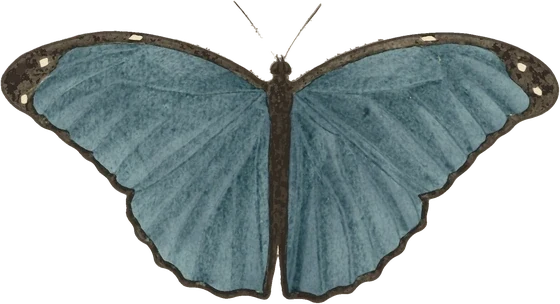
Blue Morpho butterfly: why its wings are so blue
Morpho menelaus
The Blue Morpho's blue isn't a colour in its wings at all, but light caught in their scales. Where it lives, what it eats, and the 1770s plate our morpho comes from.
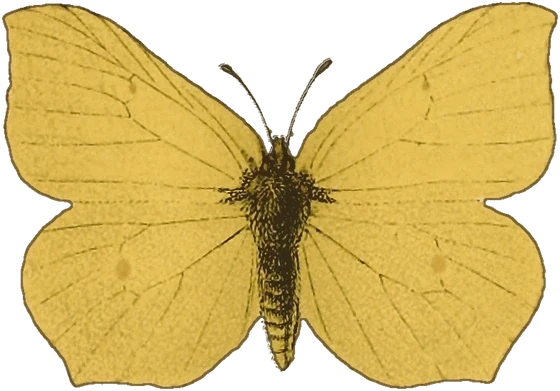
Brimstone butterfly: facts, caterpillar and food plant
Gonepteryx rhamni
The butter-yellow butterfly of early spring, which may live ten months and sleeps the winter among ivy. How to recognise it, where to see it, and what its caterpillar eats.
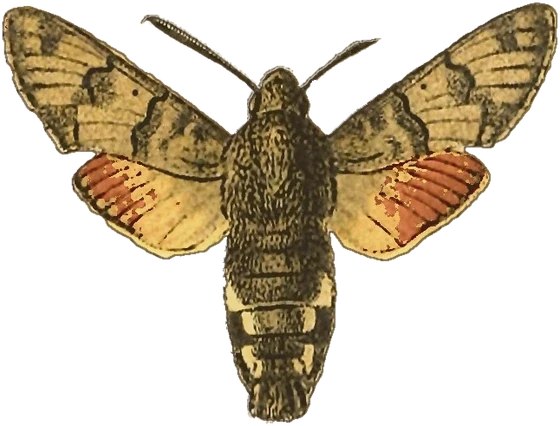
Hummingbird hawk-moth: the moth that hovers like a bird
Macroglossum stellatarum
A moth that flies by day and hovers at flowers like a tiny hummingbird, its wings humming. How to recognise it, when to see it, and what its caterpillar eats.
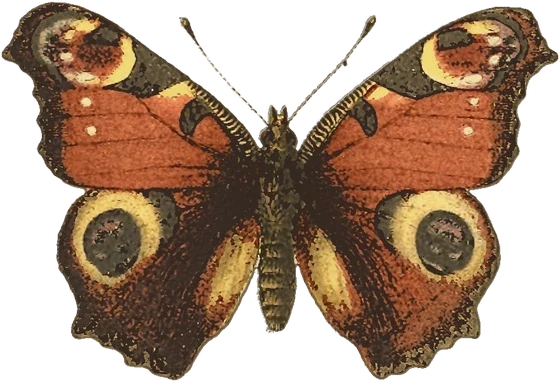
Peacock butterfly: eyespots, hissing and winter sleep
Aglais io
Four great eyespots, a hiss you can hear, and a winter spent asleep in sheds and hollow trees. How to recognise the Peacock butterfly, and what its black caterpillars eat.
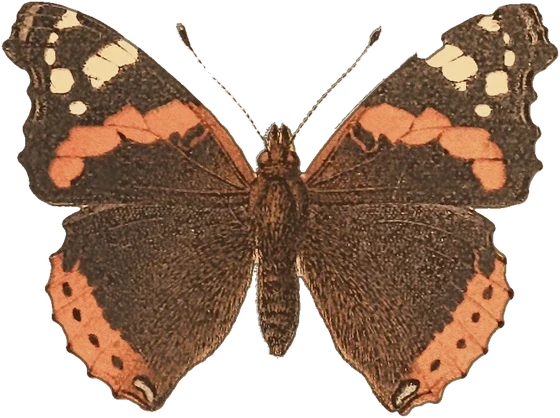
Red Admiral butterfly: facts, caterpillar and migration
Vanessa atalanta
The black, red and white butterfly of autumn gardens, which flies in from North Africa and Europe each spring. How to recognise it, where it goes and what its caterpillar eats.
Notes
· 3 min read
Butterfly bush (buddleia): the butterflies it brings
Why buddleia is called the butterfly bush, which butterflies you'll see on it in late summer, and the catch: it feeds butterflies, never caterpillars.
· 3 min read
Butterfly or moth? How to tell the difference
Antennae, bodies, wings at rest and the time of day: how to tell a butterfly from a moth, and the many moths that break the rules. With pictures from old plates.
· 3 min read
What do butterflies eat? Nectar, fruit, mud and nothing
Butterflies drink, never chew: nectar, rotting fruit, honeydew, sap and salts from mud, while some moths never eat at all. What butterflies and caterpillars eat.
· 4 min read
Relaxing puzzle games with no timer: the 7 rules behind ours
What makes a puzzle game truly relaxing? No timers, no fail states, no streaks. The seven-rule calm rulebook The Quiet Cabinet is built on.
· 4 min read
A sort puzzle game with no ads, no timer and no way to lose
Love water sort and ball sort puzzles but not the ads? The Quiet Cabinet is a calm sort puzzle for iPhone, with butterflies, music and nothing to fail.
· 5 min read
Vintage butterfly illustrations: the plates behind our game
Eckstein's 1913 German butterflies, Cramer and Stoll's 1770s exotics and more: the public-domain natural history plates every butterfly in our game comes from.