



 The Quiet Cabinet

Arctia villica
Cream-spot Tiger: the moth of clifftops and dunes
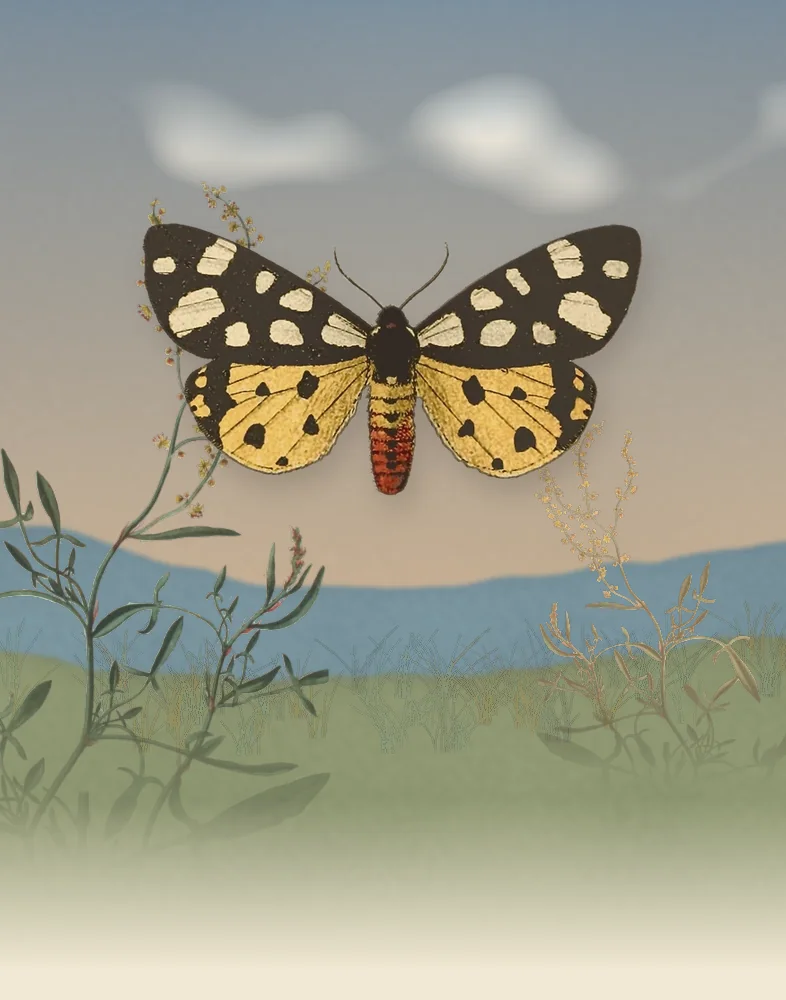
The Cream-spot Tiger is one of Britain's handsomest tiger moths, and a creature of the coast. Its black forewings are set with bold cream spots, and when it's disturbed it shows the brighter colours hidden beneath.
How to recognise it
- Size: a wingspan of about 45 to 60 millimetres.
- Forewings: black, with large cream spots.
- Hindwings: bright, spotted with black: yellow by one account, red to orange by another; freshly emerged moths are said to be scarlet, dulling with age.
- Body: a furry black thorax, and an orange-red abdomen.
When disturbed it shows its hindwings and its orange-red body, a warning to predators.
When and where to see it
It flies in May and June, into early July, in one generation. It usually flies at night and comes readily to lights; the females sometimes fly by day.
In Britain it lives in southern England and south Wales, and on the Channel Islands, most often near the coast: on clifftops, saltmarshes and sand dunes, and on heathland and other open, grassy places.
Its caterpillar and food plants
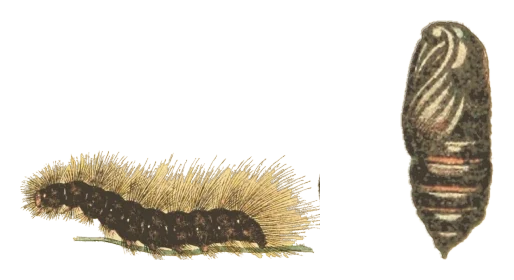
The caterpillar is hairy and dark, like other tiger moths', with tufts of brown hair. It feeds on a range of low plants, among them dead-nettles, dandelions, plantains and docks, and lives as a caterpillar from July right through the winter to late April or early May. Then it spins a cocoon among low plants, and the moth comes out about 20 days later.
The plate it comes from
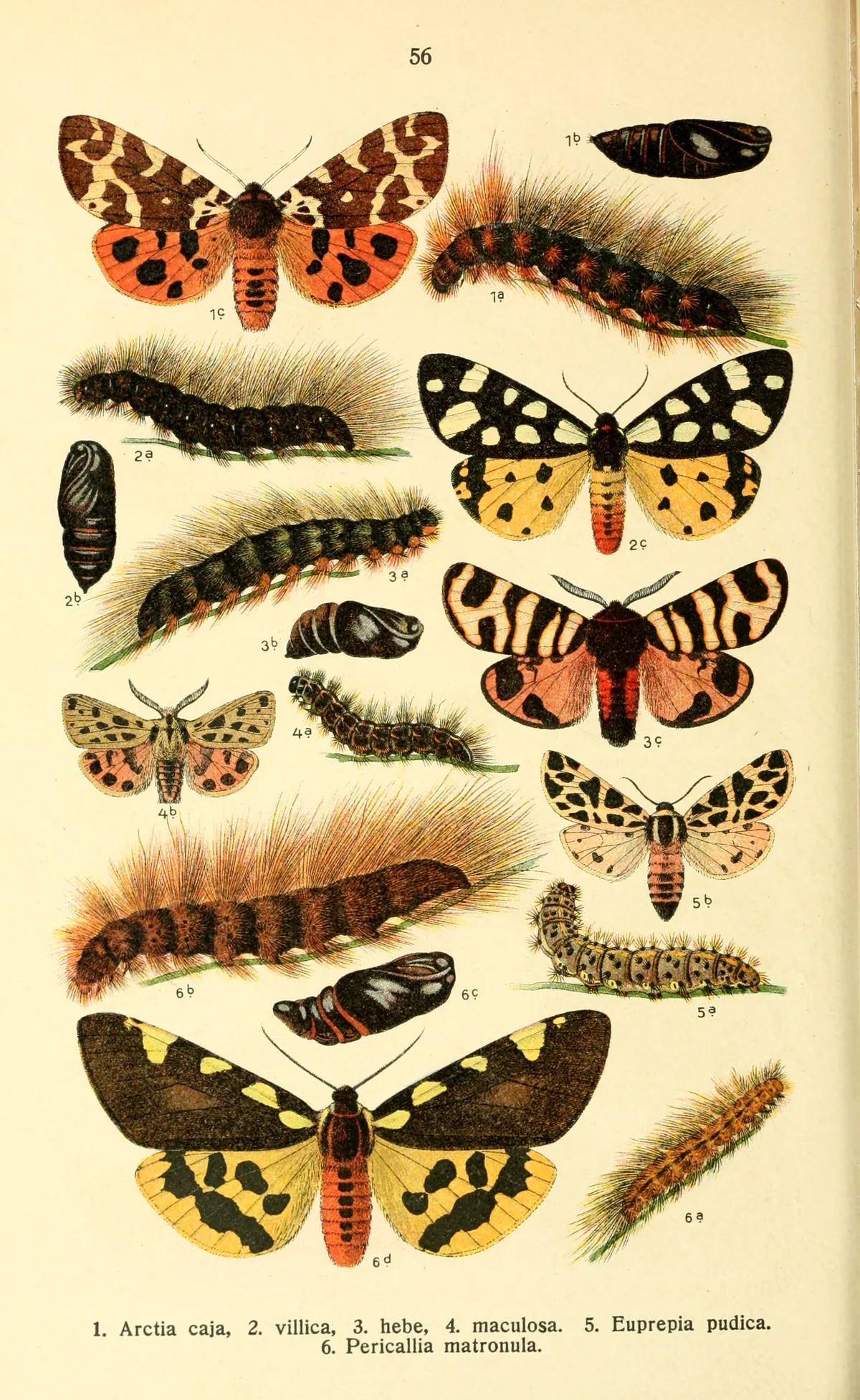
The Cream-spot Tiger in The Quiet Cabinet is figure 2c of this plate. On its Field Guide page it flies above sheep's sorrel in an open grassy place at dusk.
In The Quiet Cabinet
It's one of the thirteen species of the Night Wing, the game's fourth chapter, part of the Butterfly Collection. When its case is completed, a low cello joins the plate's music.
Sources
- Butterfly Conservation, Cream-spot Tiger
- UKMoths, Cream-spot Tiger
- Wikipedia, Arctia villica
More from the journal

Black-veined White: the butterfly Britain lost
A large white butterfly with black veins, lost from Britain around 1925 for reasons still unknown. Its story, its caterpillars' silk nests, its strange female.

Broad-bordered Yellow Underwing: orange hidden beneath
A brown late-summer moth that hides bright orange hindwings with a broad black border, showing them only in flight. How to know it, and its many forms.

Buff-tip moth: the moth that looks like a broken twig
A moth that rests looking just like a snapped birch twig, whose yellow-and-black caterpillars feed in crowds and strip branches bare. How to know the Buff-tip.