



 The Quiet Cabinet

Speyeria aglaja
Dark Green Fritillary: the powerful flier of the downs
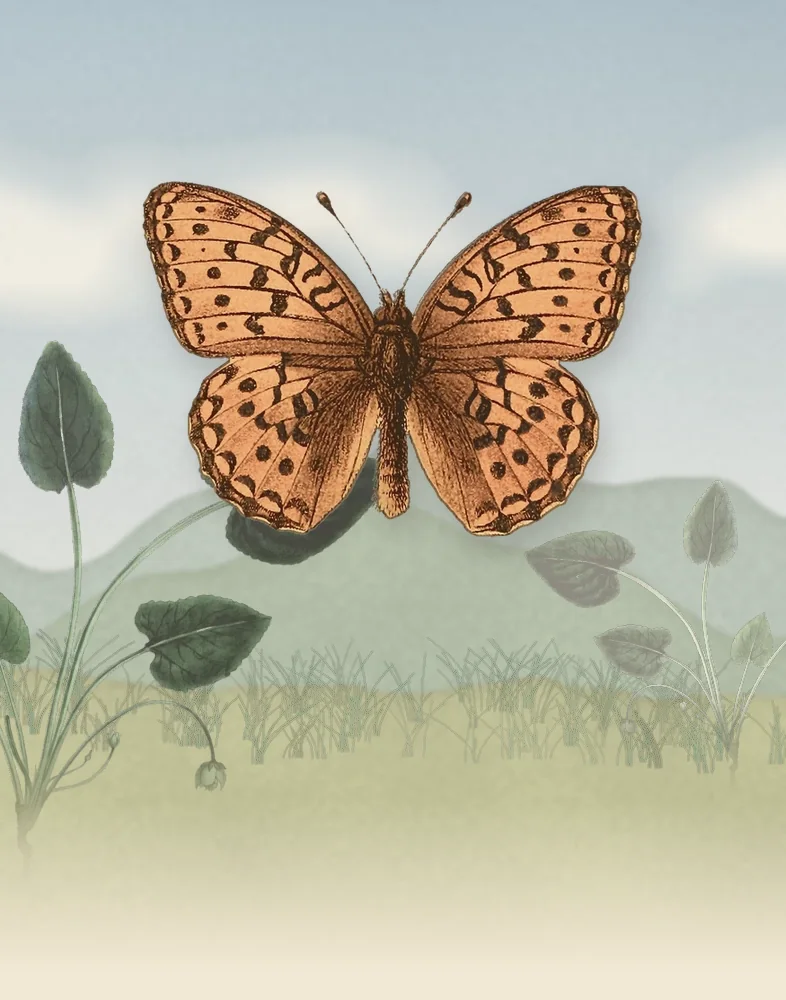
On an open, windswept down in July, a large orange butterfly comes racing across the slope, dips to a thistle, and is off again before you can follow it. The Dark Green Fritillary is one of the most powerful fliers among Britain's butterflies.
How to recognise it
- Size: large, with a wingspan of about 58 to 69 millimetres.
- Above: orange, spotted and barred with black.
- Beneath: the hindwing is washed with green and set with large silver spots, and the green gives it its name. That's also the way to tell the male from the far rarer High Brown Fritillary, which can fly with it on bracken-covered hillsides: look at the underside while it feeds on a thistle.
When and where to see it
It has one generation a year. The butterflies come out in mid-June and are at their peak in early July; in the north of Scotland they come later, at their peak in late July and early August. The males patrol large areas, while the females rest low in the grass; both feed mostly in the early morning and late afternoon, at knapweeds, thistles and brambles.
It's one of the most widespread fritillaries in Britain, in flower-rich grassland of many kinds: chalk and limestone downs, coastal grassland and dunes, moorland and woodland rides. It is found in England, Wales, Scotland and Ireland, rarer in the east and in Ireland, and it's the only fritillary on Orkney and the Outer Hebrides.
Its caterpillar and food plants
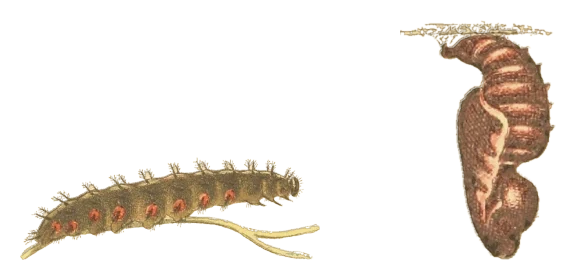
The female searches deep in the grass for the lushest violets, the caterpillar's only food: common dog-violet, hairy violet on chalk and limestone, and marsh violet in the wetter north and west. She lays her eggs one at a time, and as soon as the caterpillar hatches it goes into hiding for the winter, without feeding, in a curled leaf or among debris. In spring it feeds in the sunshine: mostly black, with a faint yellow stripe along its back and red spots along its sides. It draws leaves together into a loose tent, and the chrysalis hangs from the top of it.
How it's faring
Its numbers rose between 1976 and 2019, but it was found in about 40 per cent fewer places, and it is listed as Near Threatened on Great Britain's Red List.
The plate it comes from
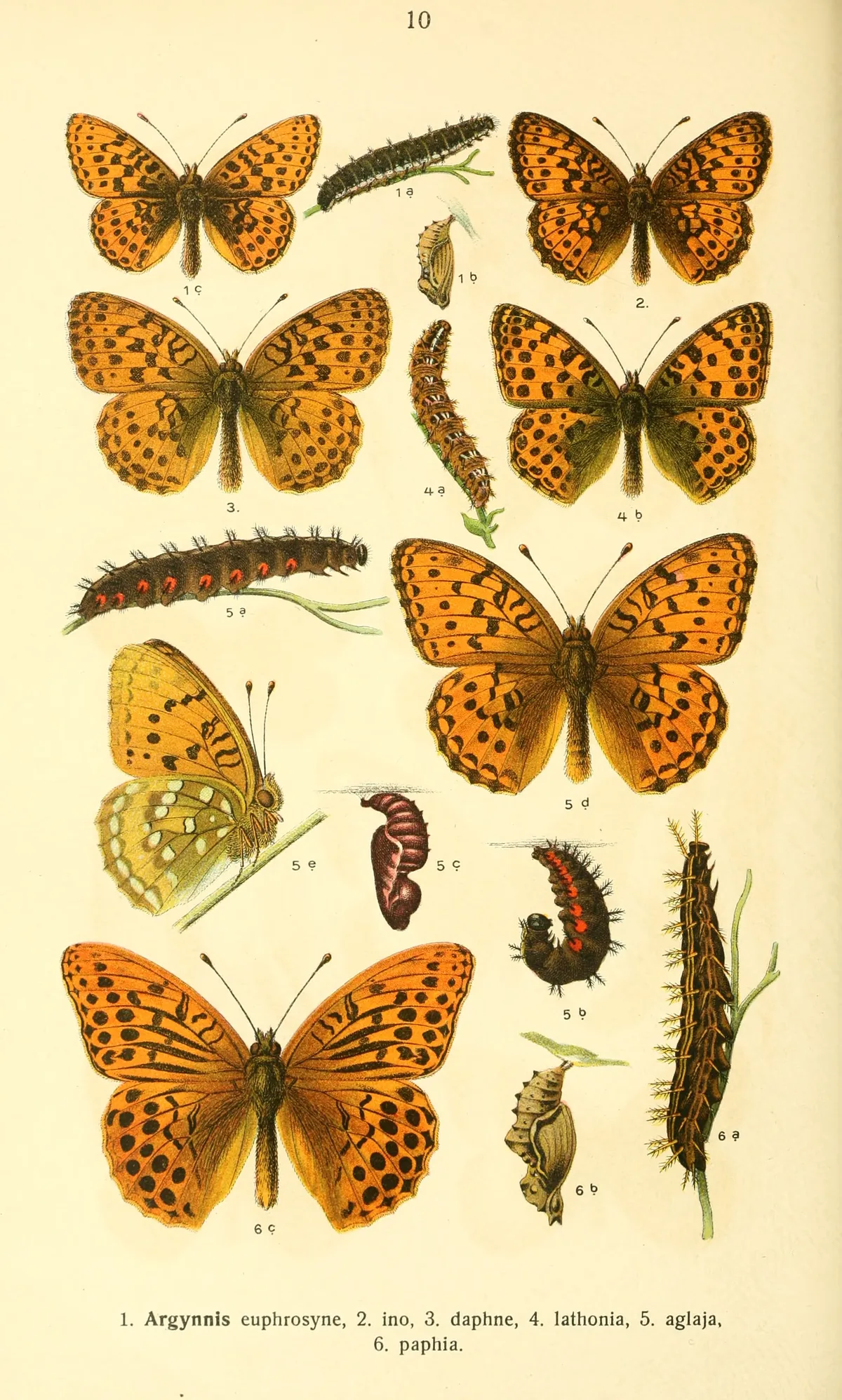
The Dark Green Fritillary in The Quiet Cabinet is figure 5d of this plate of fritillaries. On its Field Guide page it flies above hairy violet, drawn from the Dutch Flora Batava.
In The Quiet Cabinet
It's one of the thirteen species of the Meadow, the game's second chapter, part of the Butterfly Collection. When its case is completed, a marimba joins the plate's music.
Sources
- Butterfly Conservation, Dark Green Fritillary
- UK Butterflies, Dark Green Fritillary
More from the journal

Black-veined White: the butterfly Britain lost
A large white butterfly with black veins, lost from Britain around 1925 for reasons still unknown. Its story, its caterpillars' silk nests, its strange female.

Broad-bordered Yellow Underwing: orange hidden beneath
A brown late-summer moth that hides bright orange hindwings with a broad black border, showing them only in flight. How to know it, and its many forms.

Buff-tip moth: the moth that looks like a broken twig
A moth that rests looking just like a snapped birch twig, whose yellow-and-black caterpillars feed in crowds and strip branches bare. How to know the Buff-tip.