



 The Quiet Cabinet

Brintesia circe
Great Banded Grayling: the butterfly that hides on bark
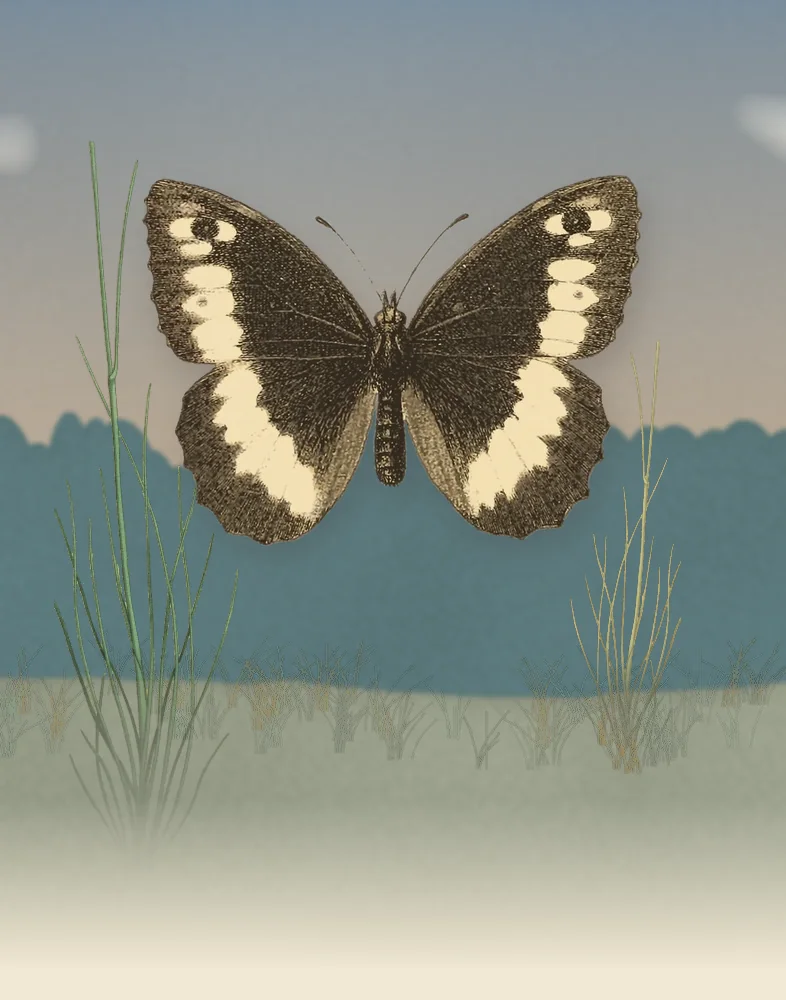
In the light woods of southern Europe in summer, a big dark butterfly with a broad white band sails between the trees, lands on a trunk, closes its wings, and is gone: its marbled grey underside matches the bark. It's a Great Banded Grayling, one of the largest butterflies of Europe, and it doesn't live in Britain.
How to recognise it
- Size: large, with a wingspan of about 65 to 80 millimetres.
- Above: black or dark brown, with a broad white band across the wings.
- Beneath: marbled grey, with black eyespots ringed in white.
- Its look-alike, the Woodland Grayling, lacks the second white streak on the hindwing and has eyespots ringed in yellow.
A butterfly of trees and bark
The Great Banded Grayling flies once a year, from June to September. It settles on branches and trunks with its wings closed and its head up, relying on its underside, which the naturalist Adalbert Seitz described in 1909 as adapted to the bark of trees. It rarely visits flowers, and then mostly thistles. Seitz once counted more than 30 on a single tree near Genoa.
It lives in light woodland, along grassy forest edges and in dry, bushy country, from sea level to 1,600 metres, across central and southern Europe and on to Anatolia, the Caucasus and Iran.
Its caterpillar and food plants
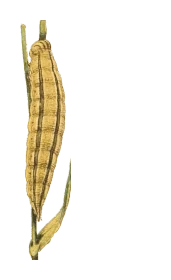
The caterpillar is yellowish brown with a dark line down its back, and feeds on grasses: sweet vernal grass, bromes, fescues and moor-grass. It spends the winter young, in a grass tussock, and feeds until June. The chrysalis is purple-brown, pointed at both ends, and lies loose on the ground.
The plate it comes from
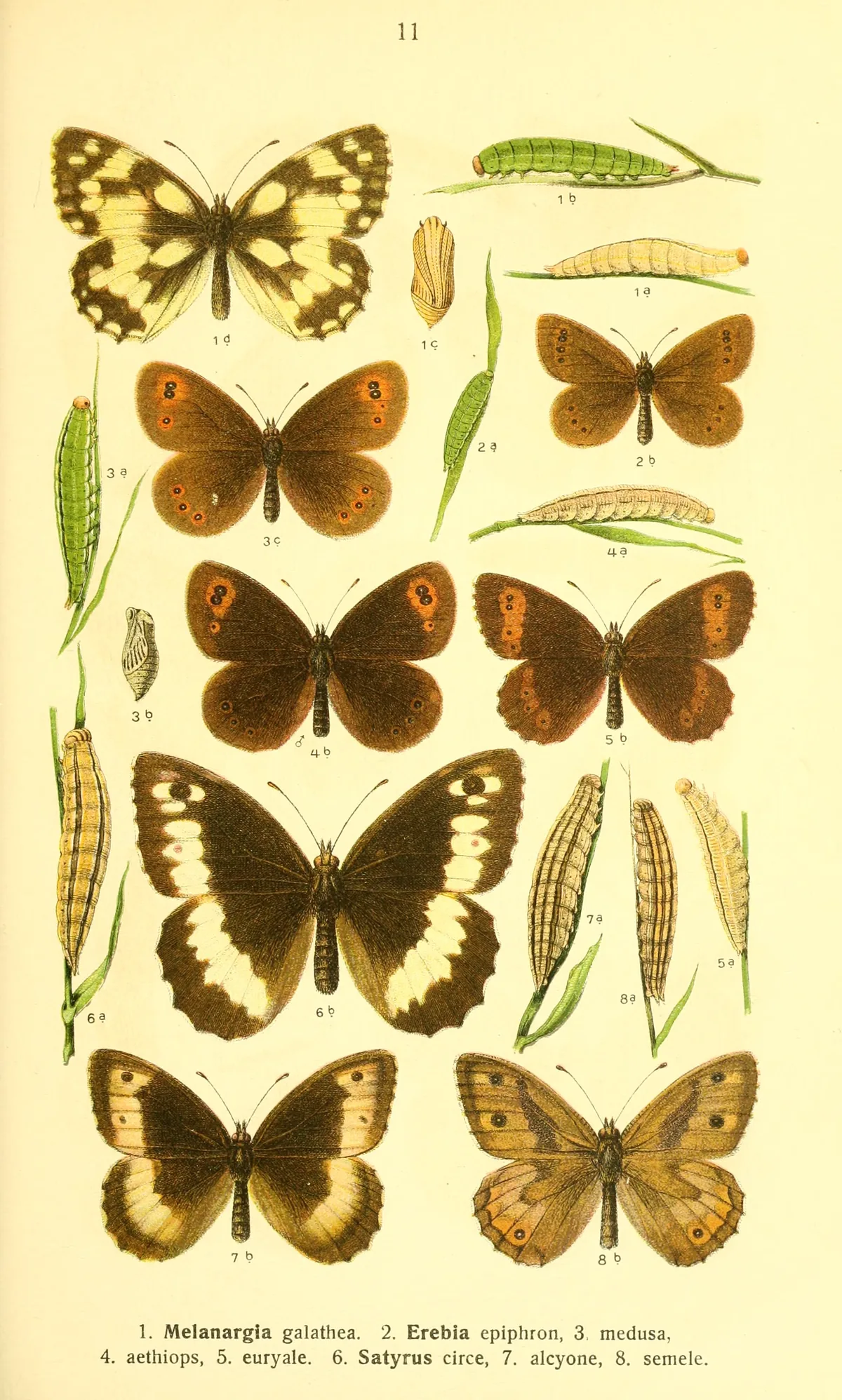
The Great Banded Grayling in The Quiet Cabinet is figure 6b of this plate, which it shares with the Marbled White. On its Field Guide page it flies over light, dry woodland in the last of the light.
In The Quiet Cabinet
It's one of the thirteen species of the Night Wing, the game's fourth chapter, part of the Butterfly Collection. When its case is completed, a celesta joins the plate's music.
Sources
- Wikipedia, Brintesia circe
- Butterflies of Europe (Naturalis), Brintesia circe
More from the journal

Black-veined White: the butterfly Britain lost
A large white butterfly with black veins, lost from Britain around 1925 for reasons still unknown. Its story, its caterpillars' silk nests, its strange female.

Broad-bordered Yellow Underwing: orange hidden beneath
A brown late-summer moth that hides bright orange hindwings with a broad black border, showing them only in flight. How to know it, and its many forms.

Buff-tip moth: the moth that looks like a broken twig
A moth that rests looking just like a snapped birch twig, whose yellow-and-black caterpillars feed in crowds and strip branches bare. How to know the Buff-tip.