



 The Quiet Cabinet

Abraxas grossulariata
Magpie moth: black, white and yellow, inside and out
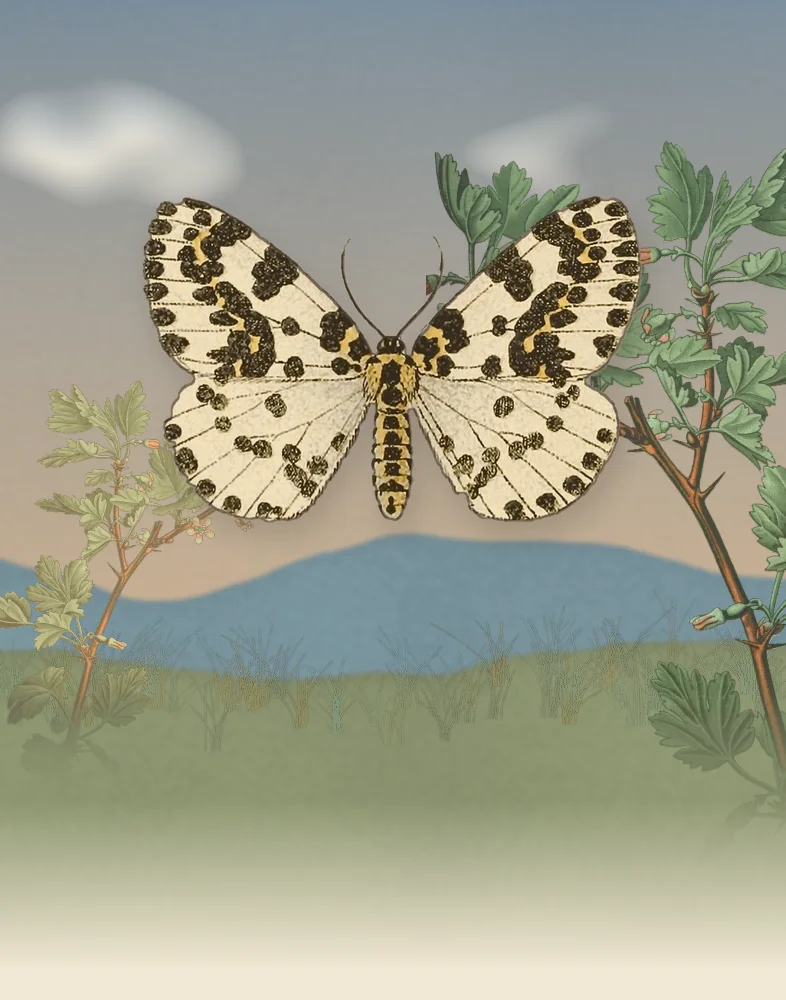
The Magpie is named, like the bird, for its colours: white, spotted with black, with a band of yellow. And unusually, its caterpillar wears the same colours as the moth.
How to recognise it
- Size: a wingspan of about 35 to 50 millimetres.
- Forewings: white, with rows of black spots and a pale yellow band near the base; the hindwings are paler.
It's very distinctive. Yet no two are quite alike: it is a highly variable moth, with many different forms.
A collector's moth
Its variety made the Magpie a favourite of early collectors, who bred it to obtain unusual colours and patterns. And it had a place in science too: research on the Magpie's forms helped lead to the discovery of characteristics passed down through the sex chromosomes.
When and where to see it
It flies in July and August, and is regularly drawn to lights; by day it may rest on bramble and other low leaves. It's most abundant on heather moorland in the north, and also lives in gardens, allotments, hedgerows and woodland. It's found across most of Britain and Ireland, less often in Scotland. Though still common, it is now declining in many places.
Its caterpillar and food plants
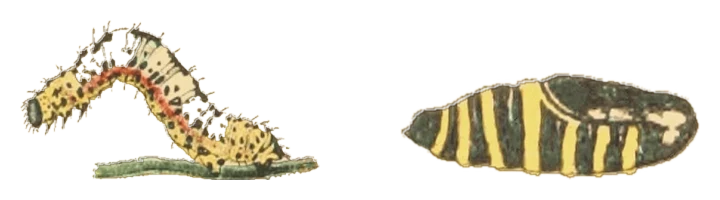
The caterpillar, coloured like the moth, feeds on currant and gooseberry bushes, and was once counted a garden pest. It also eats blackthorn, hawthorn, hazel, privet, spindle and bramble, and heather in the north of Scotland. Caterpillars can be found from late August until the following June: they spend the winter on their food plant.
The plate it comes from
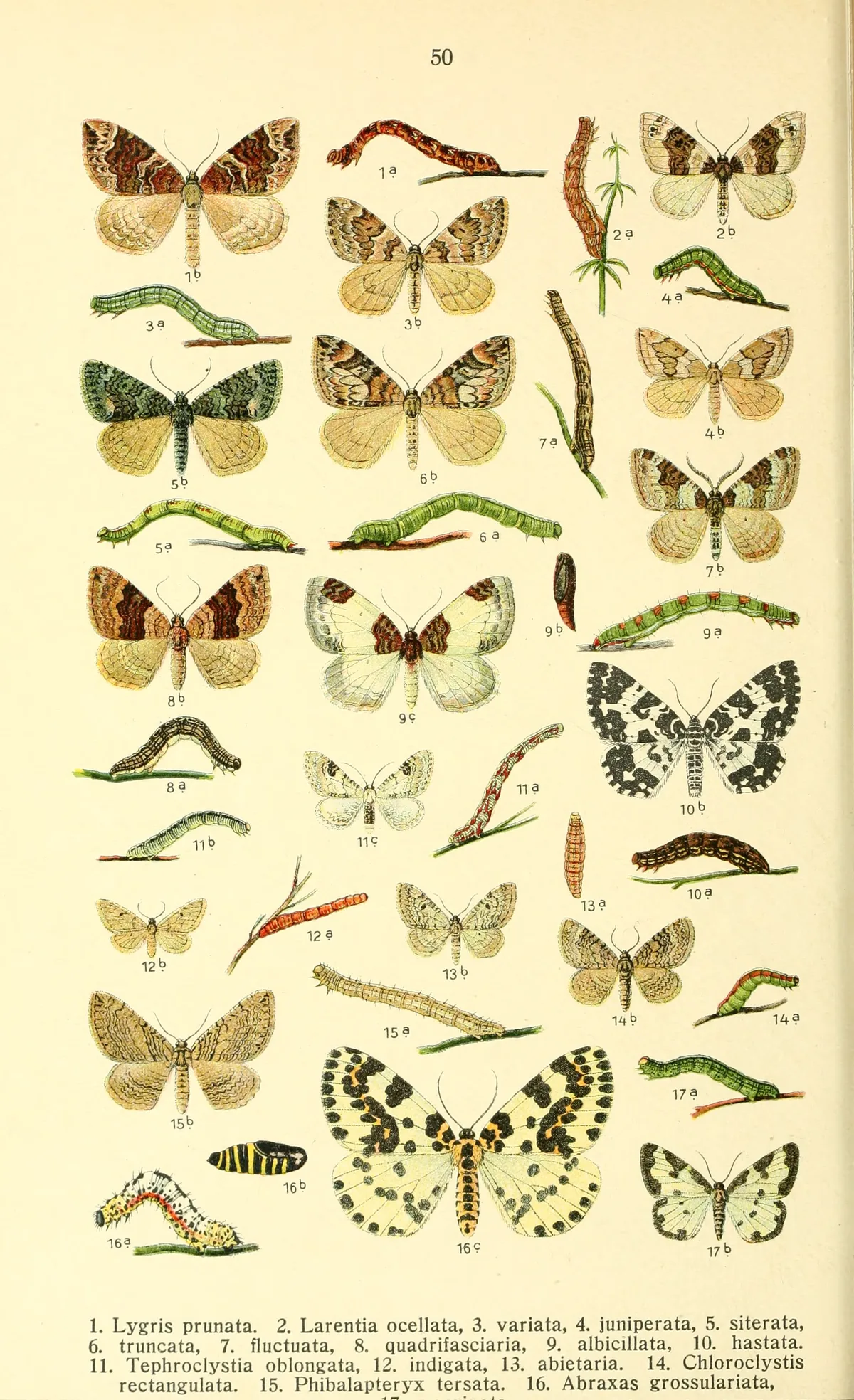
The Magpie in The Quiet Cabinet is figure 16c of this plate of carpet moths and pugs. On its Field Guide page it flies above gooseberry in a cottage garden at dusk.
In The Quiet Cabinet
It's one of the thirteen species of the Night Wing, the game's fourth chapter, part of the Butterfly Collection. When its case is completed, a celesta joins the plate's music.
Sources
- Butterfly Conservation, Magpie
- UKMoths, Magpie
- Wikipedia, Abraxas grossulariata
More from the journal

Black-veined White: the butterfly Britain lost
A large white butterfly with black veins, lost from Britain around 1925 for reasons still unknown. Its story, its caterpillars' silk nests, its strange female.

Broad-bordered Yellow Underwing: orange hidden beneath
A brown late-summer moth that hides bright orange hindwings with a broad black border, showing them only in flight. How to know it, and its many forms.

Buff-tip moth: the moth that looks like a broken twig
A moth that rests looking just like a snapped birch twig, whose yellow-and-black caterpillars feed in crowds and strip branches bare. How to know the Buff-tip.