



 The Quiet Cabinet

Siproeta stelenes
Malachite butterfly: green as the stone it's named for
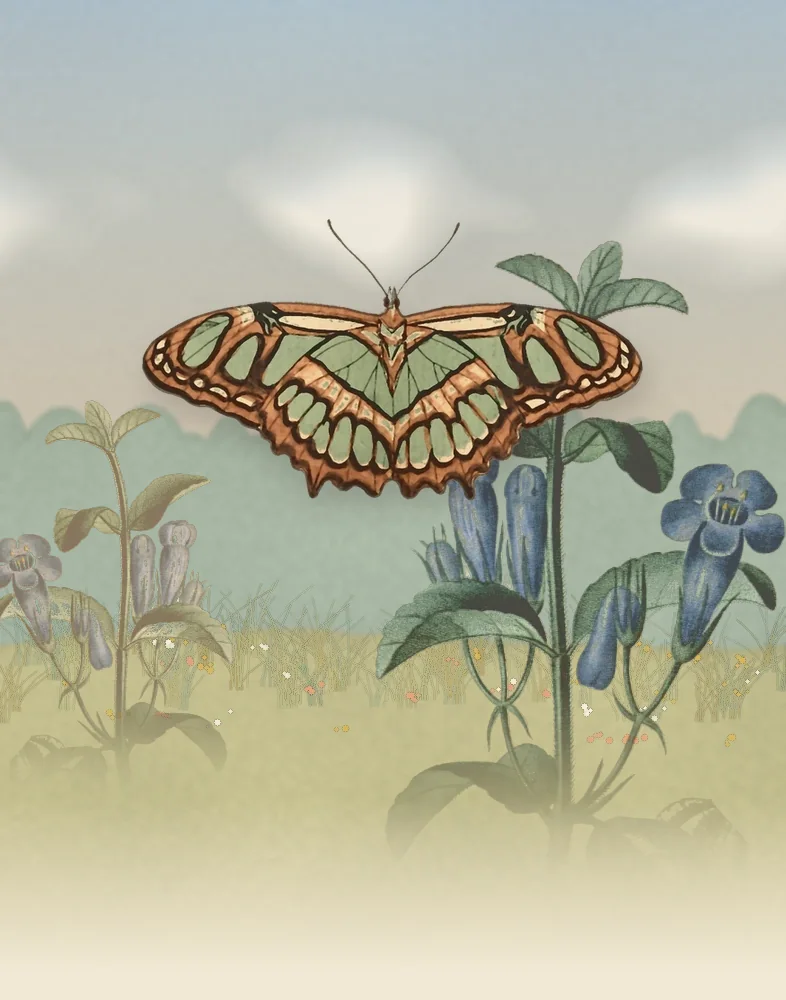
The Malachite is named for a stone: malachite, the banded green mineral, whose colour matches the brilliant green of its wings.
How to recognise it
- Size: a wingspan of about 8.3 to 10 centimetres.
- Above: black or dark brown, with patches of brilliant, sometimes translucent green or yellow-green.
- Beneath: a light orange-brown, with olive-green patches.
- Two forms: butterflies of the dry season are larger, with smudged black marks; those of the wet season are smaller, with silver marks beneath the hindwings.
Where and how it lives
It's one of the commonest butterflies of Central and northern South America, ranging from Brazil north through Central America and the West Indies to the tip of Florida and southern Texas. In southern Florida it settled only after the 1960s, probably arriving from Cuba, and it is now found there in mango, citrus and avocado orchards.
The males perch on shrubs in clearings, sometimes patrolling with a slow, floating flight, and at night the butterflies roost together under the leaves of low shrubs. Besides flower nectar they feed on the juice of rotting fruit, and sometimes on carrion and bird or bat droppings.
Its caterpillar and food plants
The female lays her eggs one at a time on the new leaves of ruellias and their relatives. The caterpillar is black with red markings, horned and spiny. The chrysalis is green, set with sharp golden spines that can prick a predator. There are two or three generations in summer, and one generation of the winter form spends the cold months as a butterfly.
The plate it comes from
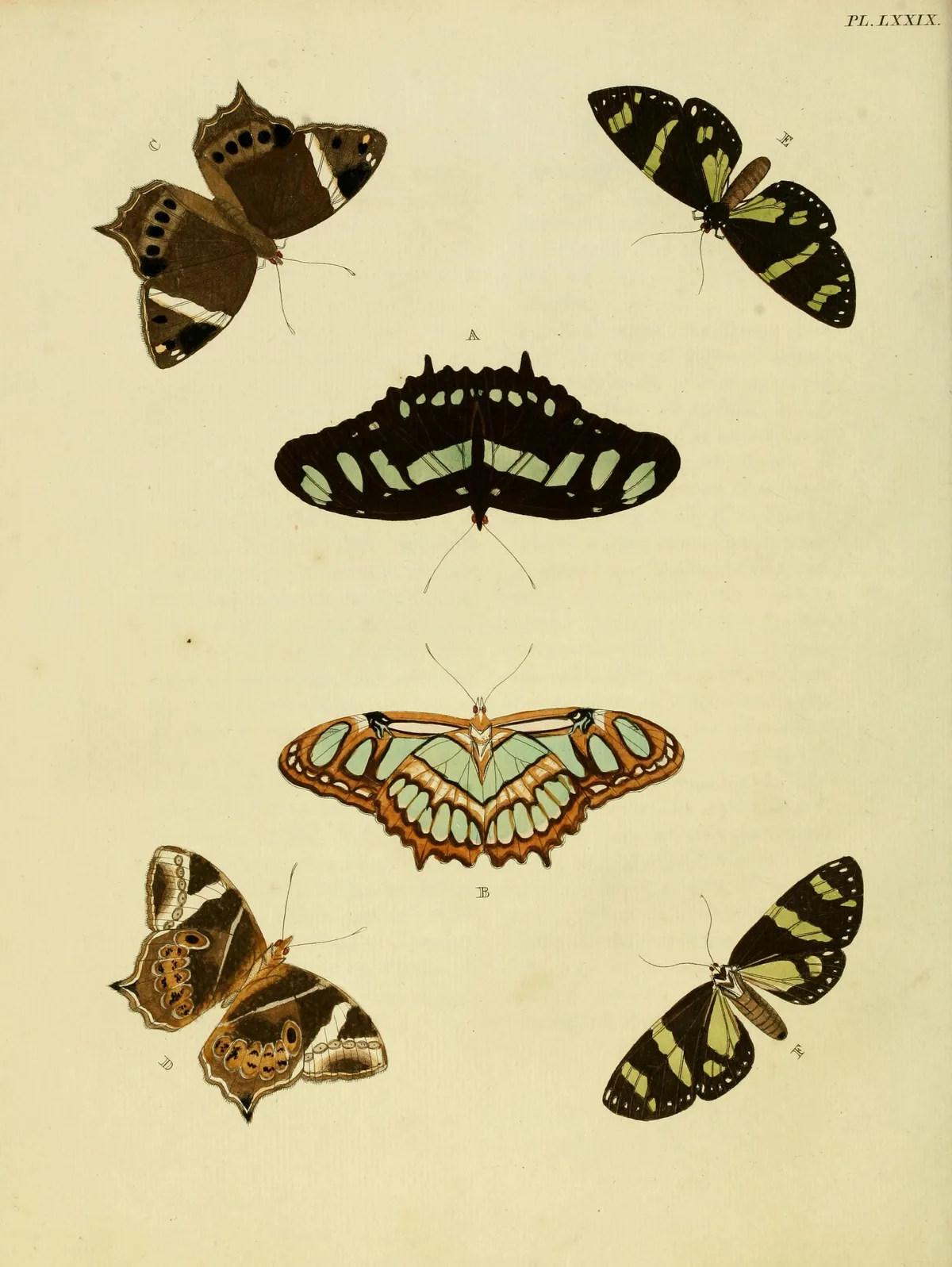
The Malachite in The Quiet Cabinet is Cramer's figure B, engraved and coloured by hand in Amsterdam in the 1770s; Cramer drew adults only, so its Field Guide page has no caterpillar. It flies above a ruellia, drawn from Descourtilz's Flore médicale des Antilles (1821–1829).
In The Quiet Cabinet
It's one of the thirteen species of the Curiosity Cabinet, the game's last chapter, part of the Butterfly Collection. When its case is completed, a felt piano joins the plate's music.
Sources
- Wikipedia, Siproeta stelenes
- Butterflies and Moths of North America, Malachite
More from the journal

Black-veined White: the butterfly Britain lost
A large white butterfly with black veins, lost from Britain around 1925 for reasons still unknown. Its story, its caterpillars' silk nests, its strange female.

Broad-bordered Yellow Underwing: orange hidden beneath
A brown late-summer moth that hides bright orange hindwings with a broad black border, showing them only in flight. How to know it, and its many forms.

Buff-tip moth: the moth that looks like a broken twig
A moth that rests looking just like a snapped birch twig, whose yellow-and-black caterpillars feed in crowds and strip branches bare. How to know the Buff-tip.