



 The Quiet Cabinet

Sphinx ligustri
Privet Hawk-moth: Britain's largest resident hawk-moth
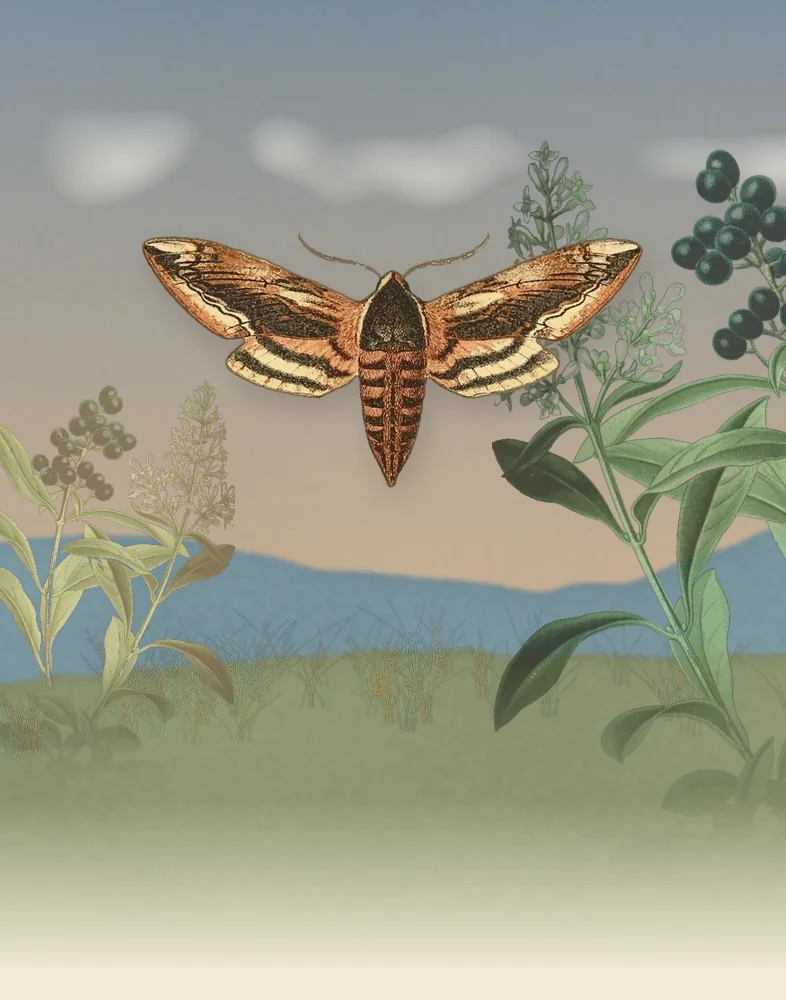
With wings up to twelve centimetres across, the Privet Hawk-moth is the largest hawk-moth that lives in Britain all year round. And its caterpillar, people who find one tend to agree, is even more spectacular than the moth.
How to recognise it
- Size: huge, with a wingspan of about 90 to 120 millimetres.
- The body: banded in pink and black.
- The hindwings: barred pink and black like the body, but often hidden at rest. The strength of the pink varies.
A moth of summer nights
It flies at night in June and July, in one generation, and is drawn to lights. It feeds on the nectar of strongly scented flowers. Newly emerged moths sometimes rest by day upright on tree trunks and fence posts. A disturbed male can even make a hissing sound, by rubbing scales and spines at the tip of his body.
It lives in open woodland, hedgerows, gardens, downland, fens and coastal scrub, especially on chalky soils, across the southern half of Britain, more locally in the Midlands and along the coast in Wales.
Its caterpillar
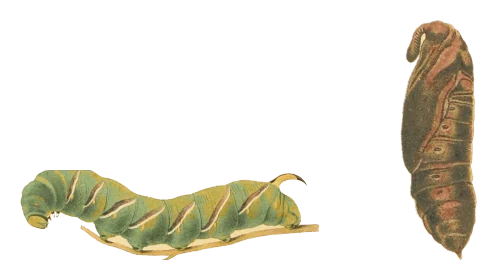
The caterpillar is bright green, with lilac and white stripes along its sides, and a curved black horn at its tail. It's found from July to September, feeding on privet, lilac and ash, and on guelder-rose, honeysuckle and other garden shrubs. When fully grown it goes underground, as deep as 30 centimetres, and spends the winter there as a chrysalis. Its name, ligustri, comes from ligustrum, the Latin for privet.
The plate it comes from
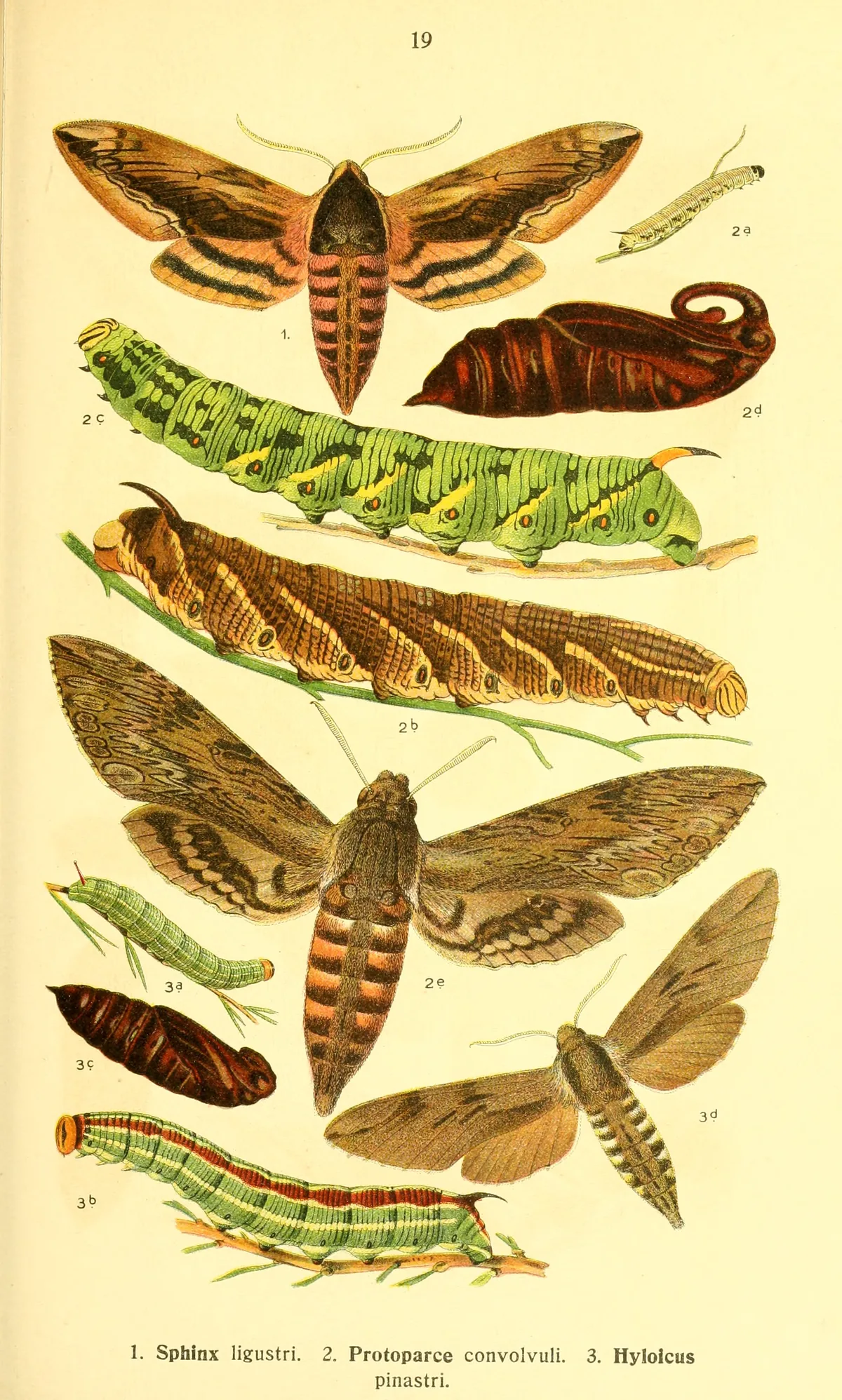
The Privet Hawk-moth in The Quiet Cabinet is figure 1 of this plate; its caterpillar and chrysalis come from the plate before it, plate 18, where Eckstein drew them beside the Eyed Hawk-moth. The Bedstraw Hawk-moth, one of the Night Wing's two treasures, is on plate 20. On its Field Guide page the Privet Hawk-moth flies above wild privet at dusk.
In The Quiet Cabinet
It's one of the thirteen species of the Night Wing, the game's fourth chapter, part of the Butterfly Collection. When its case is completed, a felt piano joins the plate's music.
Sources
- Butterfly Conservation, Privet Hawk-moth
- UKMoths, Privet Hawk-moth
- Wikipedia, Sphinx ligustri
More from the journal

Black-veined White: the butterfly Britain lost
A large white butterfly with black veins, lost from Britain around 1925 for reasons still unknown. Its story, its caterpillars' silk nests, its strange female.

Broad-bordered Yellow Underwing: orange hidden beneath
A brown late-summer moth that hides bright orange hindwings with a broad black border, showing them only in flight. How to know it, and its many forms.

Buff-tip moth: the moth that looks like a broken twig
A moth that rests looking just like a snapped birch twig, whose yellow-and-black caterpillars feed in crowds and strip branches bare. How to know the Buff-tip.