



 The Quiet Cabinet

Vanessa atalanta
Red Admiral butterfly: facts, caterpillar and migration
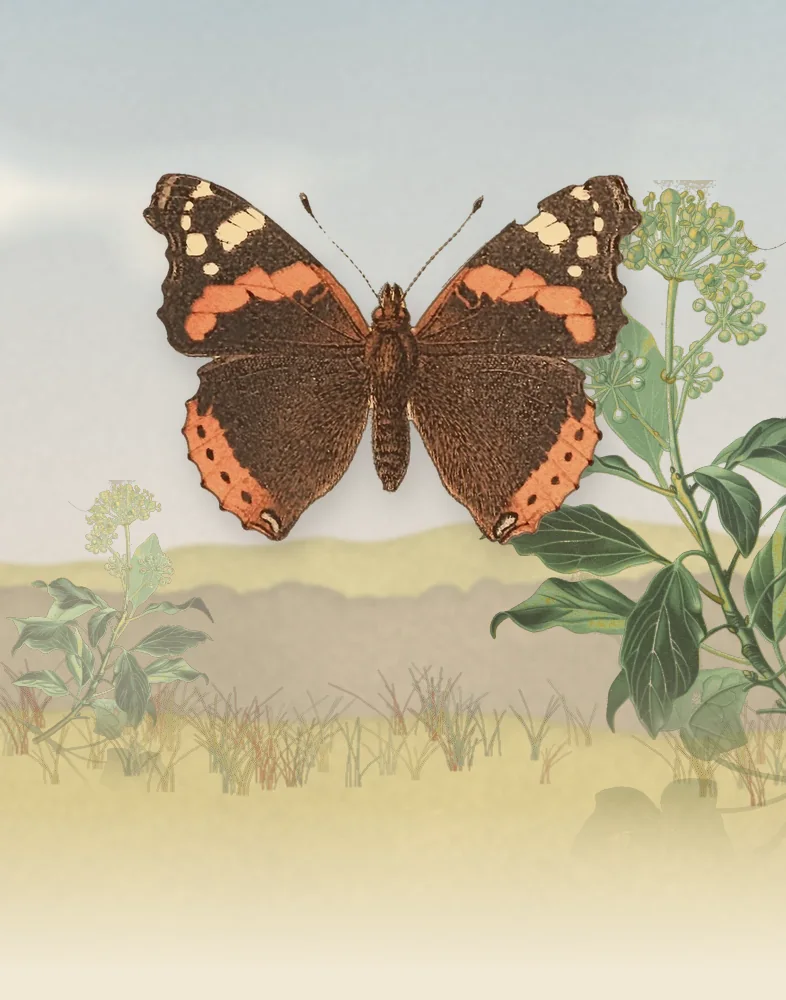
In late September, a flowering ivy on a sunny wall can be full of insects, and among the wasps and hoverflies there's often a large, dark butterfly with red bands: a Red Admiral, feeding up before the cold.
How to recognise it
- Size: large. The wingspan is 64 to 72 millimetres in the male and 70 to 78 in the female.
- Upperside: velvety black-brown, with a bright red band across each forewing and along the edge of each hindwing, and white spots near the forewing tips.
- Underside: the hindwing is mottled brown and grey, like bark, so it nearly vanishes when it closes its wings.
A butterfly that travels
Each spring and summer, Red Admirals fly north into Britain and Ireland from North Africa and continental Europe. How many come, and when, changes from year to year. The females that arrive lay their eggs, and their children are the Red Admirals of late summer and autumn, flying from about July into October or November.
For a long time almost none survived a British winter. Now a few seem to stay through it in the far south of England, and their numbers have grown a great deal: Butterfly Conservation's counts show an increase of more than 200 per cent between 1976 and 2019.
Where to see it
Almost anywhere: in gardens and on sea-shores, in town centres and on the tops of mountains. In summer it feeds at buddleia; in autumn at ivy flowers and on fallen, rotting fruit, a good reason to leave a few windfall apples under a tree.
Its caterpillar and food plants
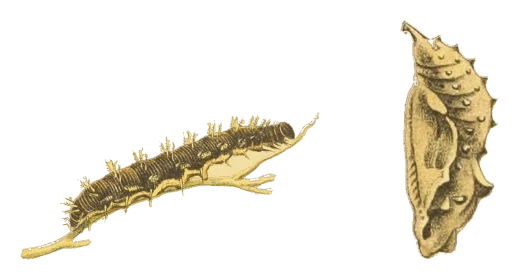
The caterpillar's food plant is above all the common nettle. It also uses small nettle, pellitory-of-the-wall and hop. A patch of nettles left in a sunny corner is a nursery for Red Admirals, and for Peacocks and Small Tortoiseshells too.
The plate it comes from
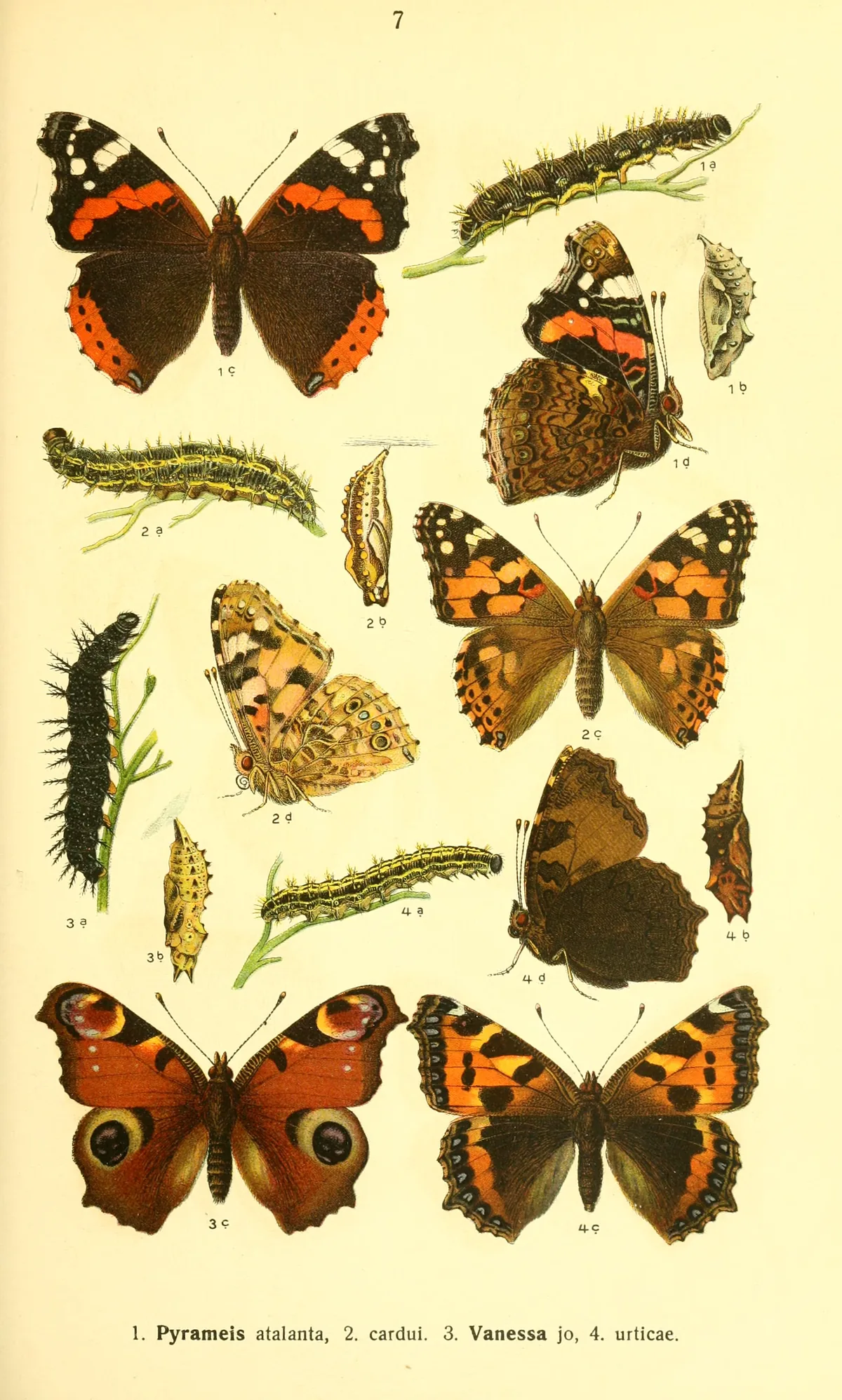
The Red Admiral in The Quiet Cabinet is figure 1c of this plate. On its Field Guide page it flies above flowering ivy, drawn from Otto Wilhelm Thomé's Flora von Deutschland, Österreich und der Schweiz (1885).
In The Quiet Cabinet
It's one of the twelve species of the Garden, the game's first chapter, which is free. When its case is completed, a low cello joins the plate's music.
Sources
- Butterfly Conservation, Red Admiral
More from the journal

Black-veined White: the butterfly Britain lost
A large white butterfly with black veins, lost from Britain around 1925 for reasons still unknown. Its story, its caterpillars' silk nests, its strange female.

Broad-bordered Yellow Underwing: orange hidden beneath
A brown late-summer moth that hides bright orange hindwings with a broad black border, showing them only in flight. How to know it, and its many forms.

Buff-tip moth: the moth that looks like a broken twig
A moth that rests looking just like a snapped birch twig, whose yellow-and-black caterpillars feed in crowds and strip branches bare. How to know the Buff-tip.