



 The Quiet Cabinet

Jordanita globulariae
Scarce Forester: the shining green moth of the chalk
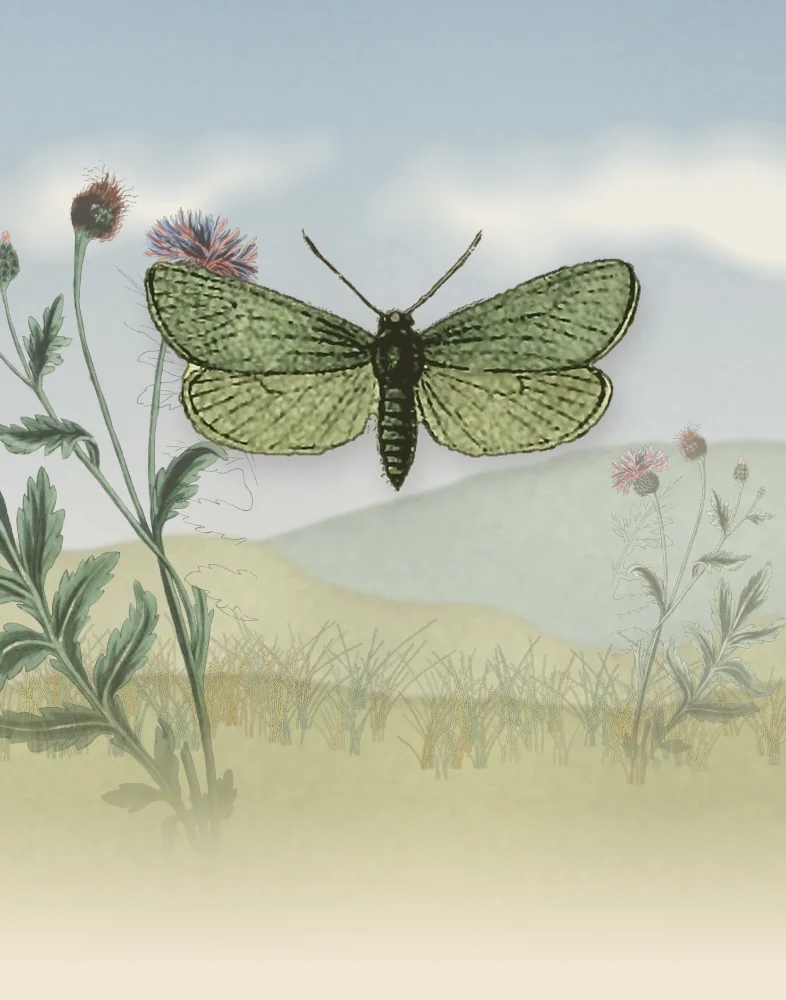
Not every moth is brown. On a sunny June day on an old chalk down, a tiny moth of shining, metallic green may rise from the long turf: a Scarce Forester, one of Britain's rarer day-flying moths.
How to recognise it
- Size: small, with a wingspan of about 19 to 30 millimetres.
- Colour: an iridescent green that catches the light.
- Its relatives: it's one of three very similar green foresters in Britain, with the Forester and the Cistus Forester, and they're hard to tell apart. The Scarce Forester is larger than the Cistus Forester, which usually lives near common rock-rose, and the male's antennae taper to a point, where the Forester's are blunt.
A moth of the sunshine
The male flies by day in sunshine, in June and July, a few in late May; now and then it flies at night. The female is more sluggish, and visits flowers such as knapweeds and salad burnet. In dull weather both sit about on flowers and plants.
It lives only on permanent chalk grassland, usually where the turf has grown longer. In Britain it is found only in England, on two areas of chalk downland: one centred on Wiltshire, with colonies in Hampshire (and formerly Gloucestershire), and one in Sussex, with an outlying colony near Dover in Kent. It is classed as Nationally Scarce.
Its caterpillar and food plants
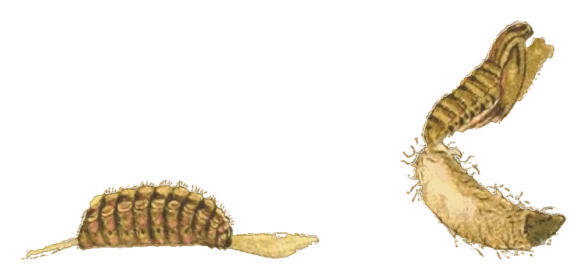
Its caterpillar feeds on common knapweed and greater knapweed. At least at first, it lives inside the leaf, mining its way between the upper and lower surfaces.
The plate it comes from
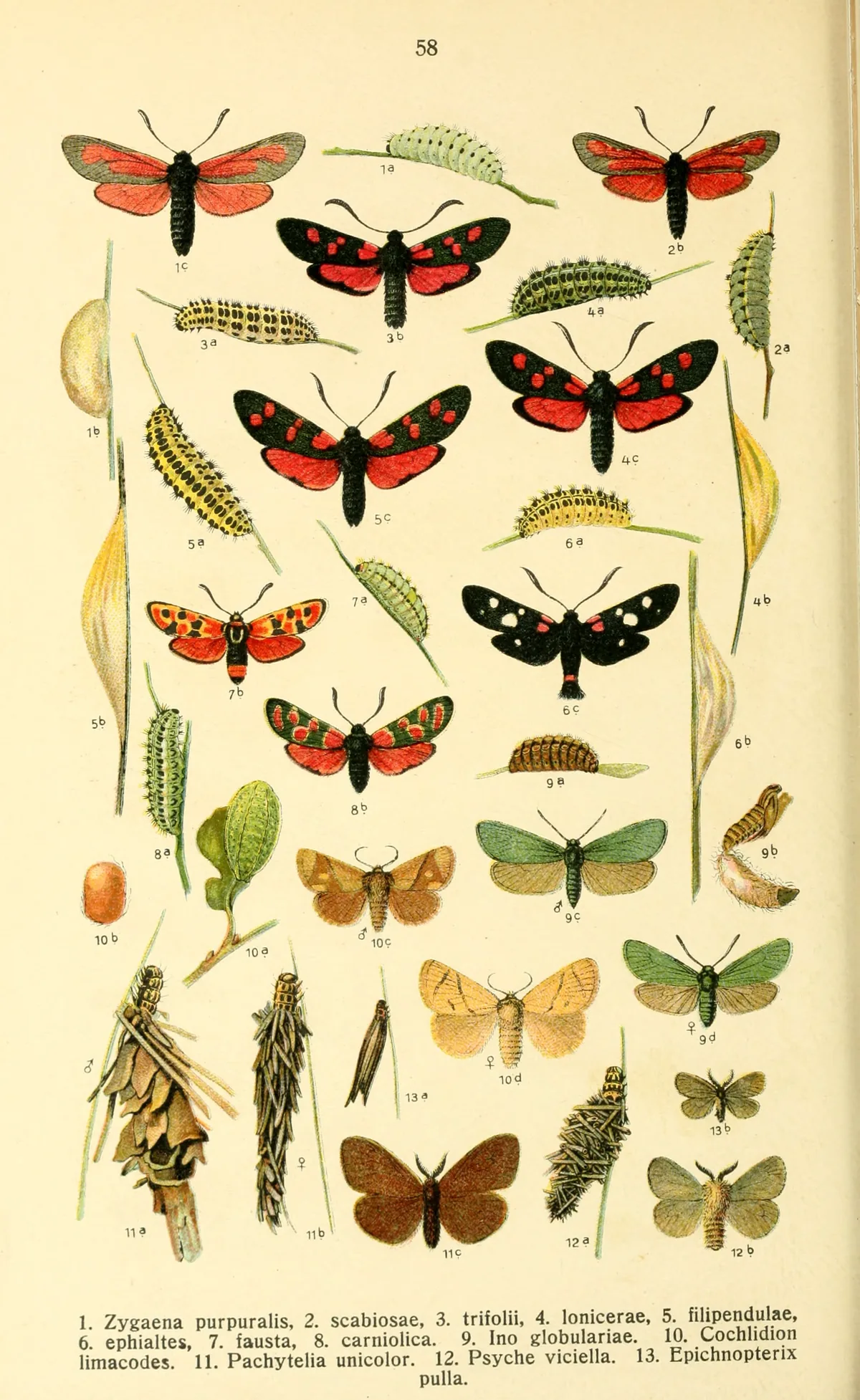
The Scarce Forester in The Quiet Cabinet is figure 9c, Eckstein's male, from the same plate as the Six-spot Burnet, its red-spotted relative. On its Field Guide page it flies above greater knapweed, drawn from the Dutch Flora Batava.
In The Quiet Cabinet
It's one of the thirteen species of the Meadow, the game's second chapter, part of the Butterfly Collection. When its case is completed, a felt piano joins the plate's music.
Sources
- Butterfly Conservation, Scarce Forester
- UKMoths, Scarce Forester
More from the journal

Black-veined White: the butterfly Britain lost
A large white butterfly with black veins, lost from Britain around 1925 for reasons still unknown. Its story, its caterpillars' silk nests, its strange female.

Broad-bordered Yellow Underwing: orange hidden beneath
A brown late-summer moth that hides bright orange hindwings with a broad black border, showing them only in flight. How to know it, and its many forms.

Buff-tip moth: the moth that looks like a broken twig
A moth that rests looking just like a snapped birch twig, whose yellow-and-black caterpillars feed in crowds and strip branches bare. How to know the Buff-tip.