



 The Quiet Cabinet

Lycaena phlaeas
Small Copper butterfly: a bright, fierce little copper
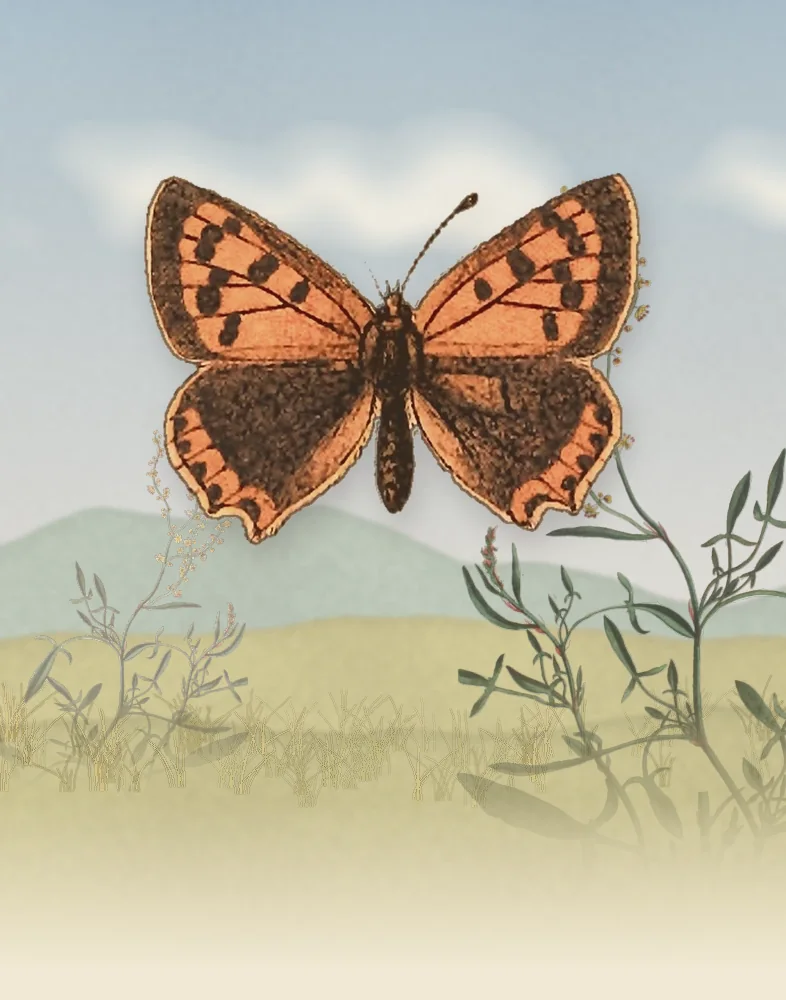
It's barely bigger than a thumbnail, but the Small Copper is one of the boldest butterflies in Britain. A male picks a sunny stone or a patch of bare ground, chases off any insect that comes near, and returns to the very same spot.
How to recognise it
- Size: small, with a wingspan of about 26 to 36 millimetres.
- Forewings: a bright, gleaming copper, spotted with black and edged in dark brown. Once it settles, it's unmistakable.
- Hindwings: dark brown, with a copper band along the edge.
- In Ireland it is its own subspecies, with a broader copper band on the hindwing and a greyer underside.
When and where to see it
The Small Copper has two or three generations a year, and four in an exceptionally good one, so it can be seen for a long season: the first in mid-April or early May, the last in October, and very occasionally in early November. It's usually seen singly or in pairs, though there can be many at a good site.
It likes warm, dry places: chalk and other unimproved grassland, heathland, woodland clearings, quarries, verges and waste ground, and now and then a garden. It's found throughout Britain and Ireland, except the uplands of the north, the far north-west of Scotland, the Outer Hebrides and Shetland. At night both sexes roost head down on grass stems.
Its caterpillar and food plants
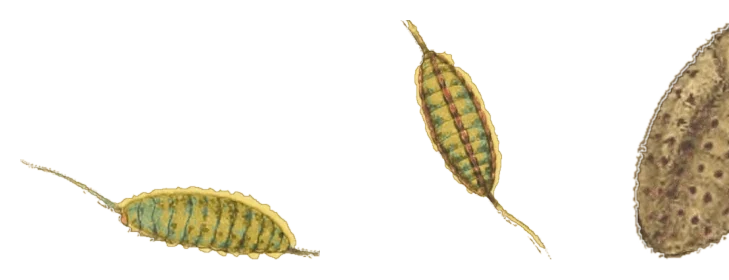
The female flies low, looking for common sorrel and sheep's sorrel, and lays her eggs one at a time, usually under a leaf of a plant in the sun. The caterpillar feeds on the underside of the leaf, cutting grooves that look like little transparent windows from above. It spends the winter small, on a pad of silk on the plant, and becomes a chrysalis low in the vegetation, often on a dead leaf.
How it's faring
The Small Copper declined across its range during the 20th century. Between 1976 and 2019 its numbers in Britain fell by about 39 per cent, though it is still listed as Least Concern.
The plate it comes from
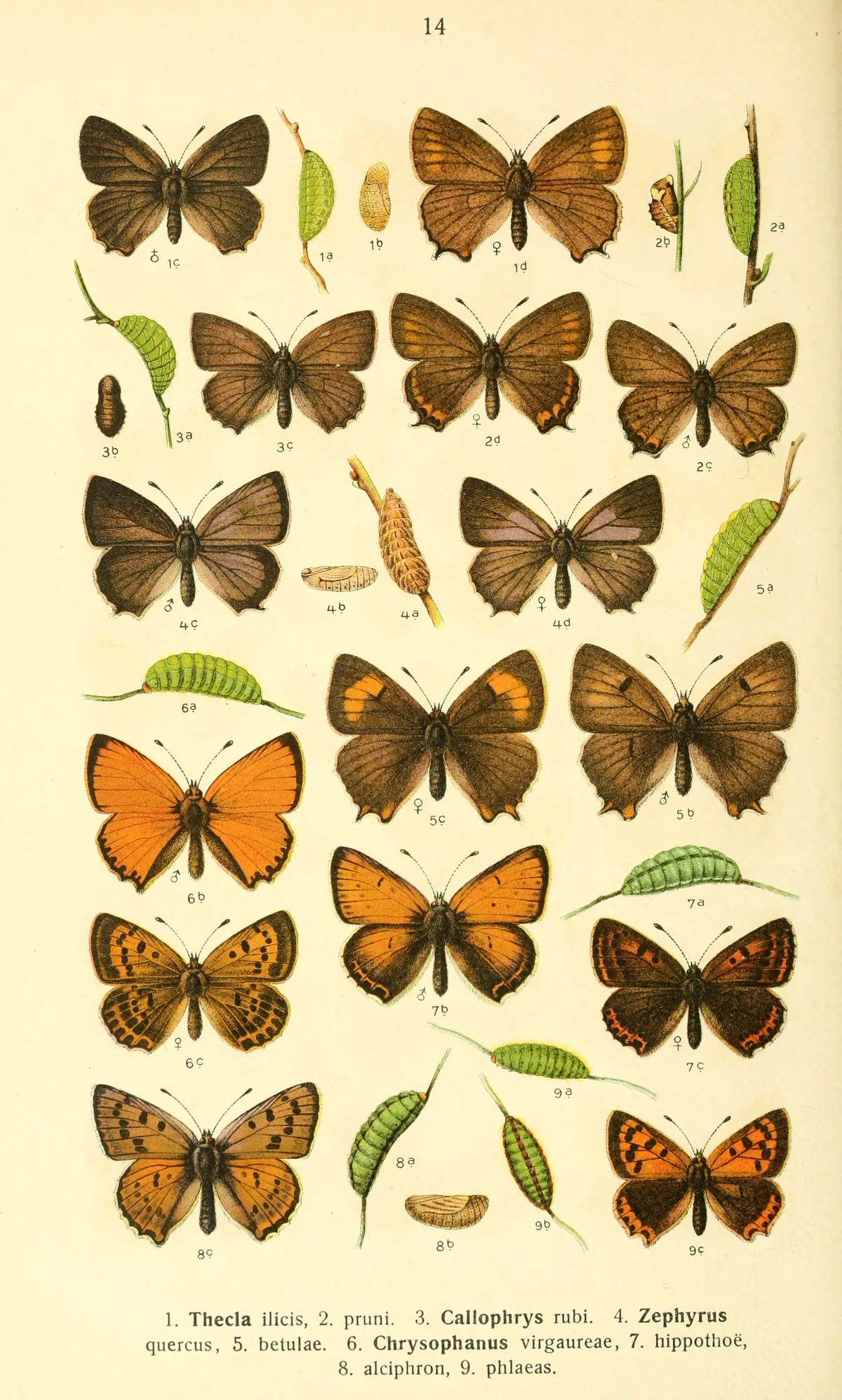
The Small Copper in The Quiet Cabinet is figure 9c, from a plate of hairstreaks and coppers. On its Field Guide page it flies above sheep's sorrel, drawn from the Dutch Flora Batava.
In The Quiet Cabinet
It's one of the thirteen species of the Meadow, the game's second chapter, part of the Butterfly Collection. When its case is completed, a marimba joins the plate's music.
Sources
- Butterfly Conservation, Small Copper
- UK Butterflies, Small Copper
More from the journal

Black-veined White: the butterfly Britain lost
A large white butterfly with black veins, lost from Britain around 1925 for reasons still unknown. Its story, its caterpillars' silk nests, its strange female.

Broad-bordered Yellow Underwing: orange hidden beneath
A brown late-summer moth that hides bright orange hindwings with a broad black border, showing them only in flight. How to know it, and its many forms.

Buff-tip moth: the moth that looks like a broken twig
A moth that rests looking just like a snapped birch twig, whose yellow-and-black caterpillars feed in crowds and strip branches bare. How to know the Buff-tip.