



 The Quiet Cabinet

Limenitis archippus
Viceroy butterfly: the Monarch's look-alike, and partner
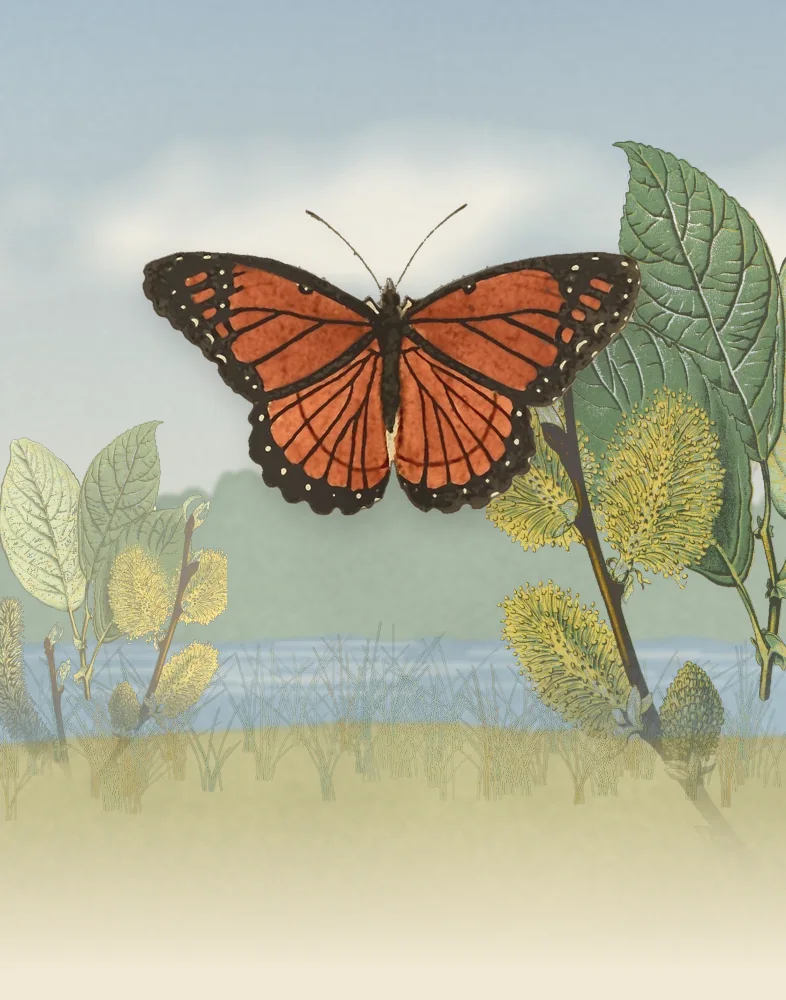
For a long time the Viceroy was the textbook example of a cheat: a harmless butterfly that copied the poisonous Monarch so that birds would leave it alone. The truth turned out to be more interesting.
How to recognise it
- Size: a wingspan of about 53 to 81 millimetres, smaller than the Monarch.
- Colour: orange, with black veins, very like a Monarch.
- The difference: a black line that crosses the veins of each hindwing. The Monarch has none.
In the north it is a lighter orange; in the south, a darker mahogany. In Florida, Georgia and the American Southwest it looks more like the Queen butterfly, and in Mexico like the Soldier.
Not a cheat, but a partner
The Viceroy was long thought to be a harmless mimic. Then experiments showed that birds find it just as distasteful as the Monarch. Its caterpillars feed on willows and poplars and take up salicylic acid from them, which makes the butterfly bitter. So the two are partners rather than model and copy: each look-alike teaches birds to avoid the other, and both are protected.
Life and range
The Viceroy flies by day, most of all in the late morning and early afternoon, and takes nectar from milkweeds, thistles and other flowers. It's found across most of the United States and in parts of Canada and Mexico, and has been Kentucky's state butterfly since 1990.
Its caterpillar feeds on willows, poplars and cottonwoods. Both the caterpillar and the chrysalis look like bird droppings, a disguise many butterflies share.
The plate it comes from
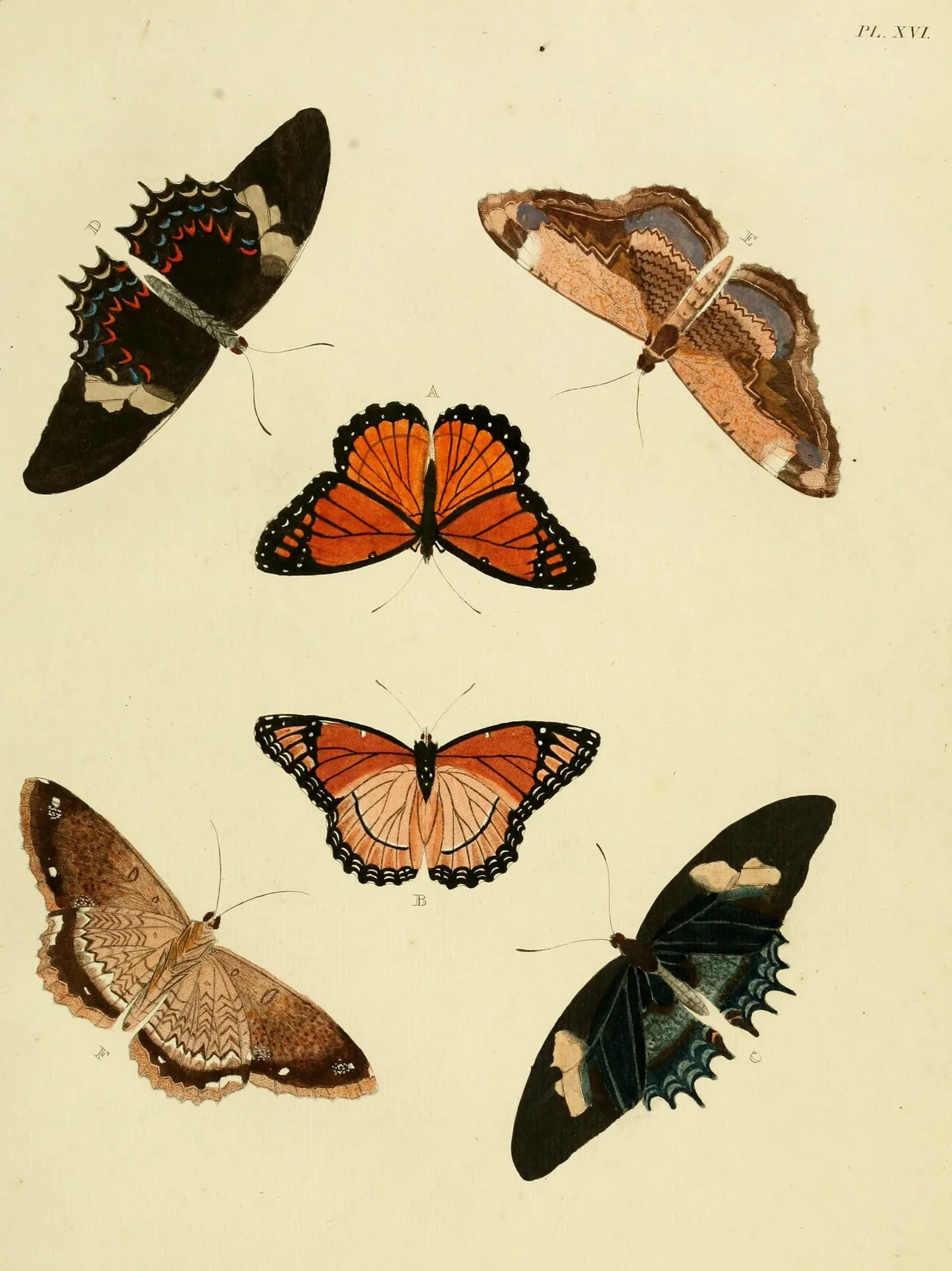
Pieter Cramer gave the Viceroy its scientific name, archippus, in 1776, in the very book its plate in The Quiet Cabinet comes from. Cramer drew adults only, so its Field Guide page has no caterpillar. It flies above goat willow, drawn from Otto Wilhelm Thomé's Flora von Deutschland, Österreich und der Schweiz (1885). The Monarch, its partner, is in the same chapter.
In The Quiet Cabinet
It's one of the thirteen species of the Curiosity Cabinet, the game's last chapter, part of the Butterfly Collection. When its case is completed, a marimba joins the plate's music.
Sources
- Wikipedia, Viceroy (butterfly)
More from the journal

Black-veined White: the butterfly Britain lost
A large white butterfly with black veins, lost from Britain around 1925 for reasons still unknown. Its story, its caterpillars' silk nests, its strange female.

Broad-bordered Yellow Underwing: orange hidden beneath
A brown late-summer moth that hides bright orange hindwings with a broad black border, showing them only in flight. How to know it, and its many forms.

Buff-tip moth: the moth that looks like a broken twig
A moth that rests looking just like a snapped birch twig, whose yellow-and-black caterpillars feed in crowds and strip branches bare. How to know the Buff-tip.