



 The Quiet Cabinet

Lasiommata megera
Wall butterfly: the brown that basks on walls and stones
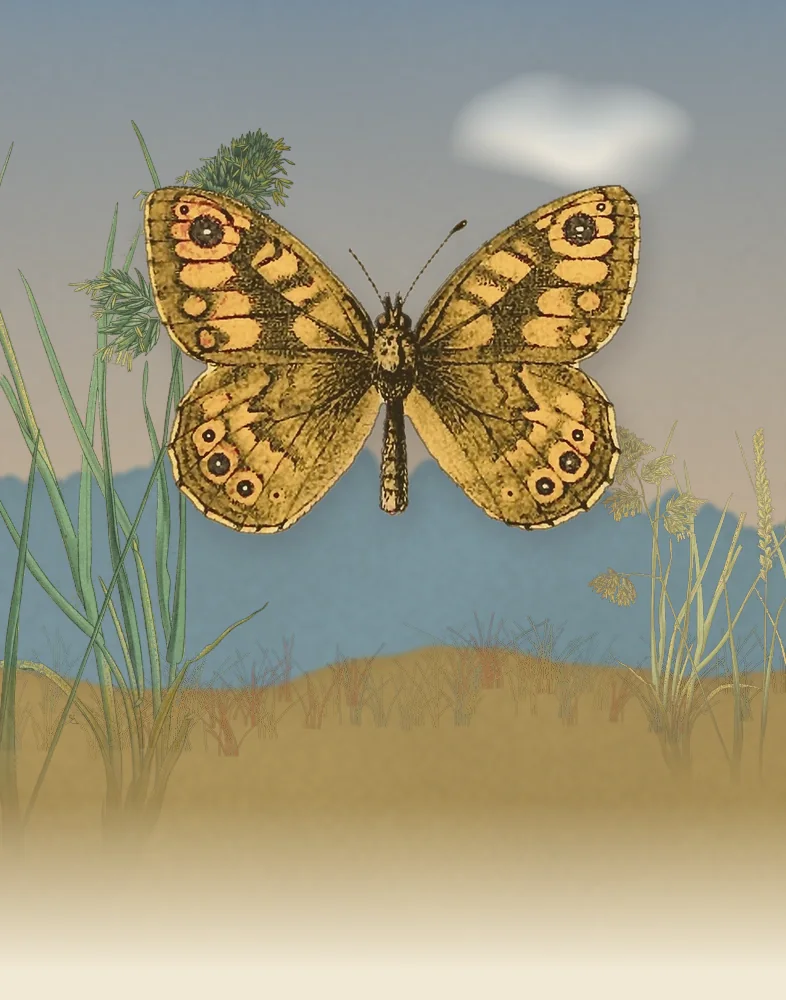
The Wall takes its name from its favourite resting place. It settles on walls, rocks, stony paths and bare ground, wings half open, soaking up the warmth of the sun and of the surface beneath it.
How to recognise it
- Size: a wingspan of about 44 to 53 millimetres.
- Above: orange-brown, heavily patterned with dark lines and eyespots; similar in size and colour to the Gatekeeper, but much more strongly marked, and sometimes mistaken for a small fritillary.
- Beneath: a light brown, delicately patterned, that hides it well on stony or sandy ground.
Basking and patrolling
On cooler days the males bask in sunny spots and dart up to meet a passing female or chase off a rival; two rivals spiral up into the air before dropping back. In hot weather they patrol fast and low instead, and avoid basking at all, sometimes resting in the shade.
The Wall has two generations a year: the first comes out in early May and is at its peak in late May and early June; the second in late July, or mid-August further north. In some years a small third appears in October.
Its caterpillar and food plants
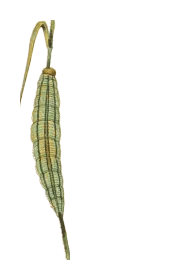
The female lays her pale green eggs, usually one at a time, in warm, sheltered spots: in grass tufts, even in hoofprints. The caterpillar feeds on grasses, among them cock's-foot, tor-grass, false brome, bents and Yorkshire-fog, mostly at night. It spends the winter as a caterpillar, but only half asleep, feeding in mild weather. The chrysalis hangs head down and can be anything from grass-green to nearly black.
Where to see it, and how it's faring
It likes short, open grassland where the turf is broken and stony: dunes, cliff edges, quarries, derelict land, farm tracks, railway banks and gardens. It is still widespread in England, Wales and Ireland, and along the coast into southern Scotland.
Inland, though, it has suffered a severe decline, vanishing from many places in central, eastern and south-east England. Between 1976 and 2019 its numbers in Britain fell by about 86 per cent, and it was lost from about 87 per cent of the places it lived. It is now listed as Endangered on Great Britain's Red List.
The plate it comes from
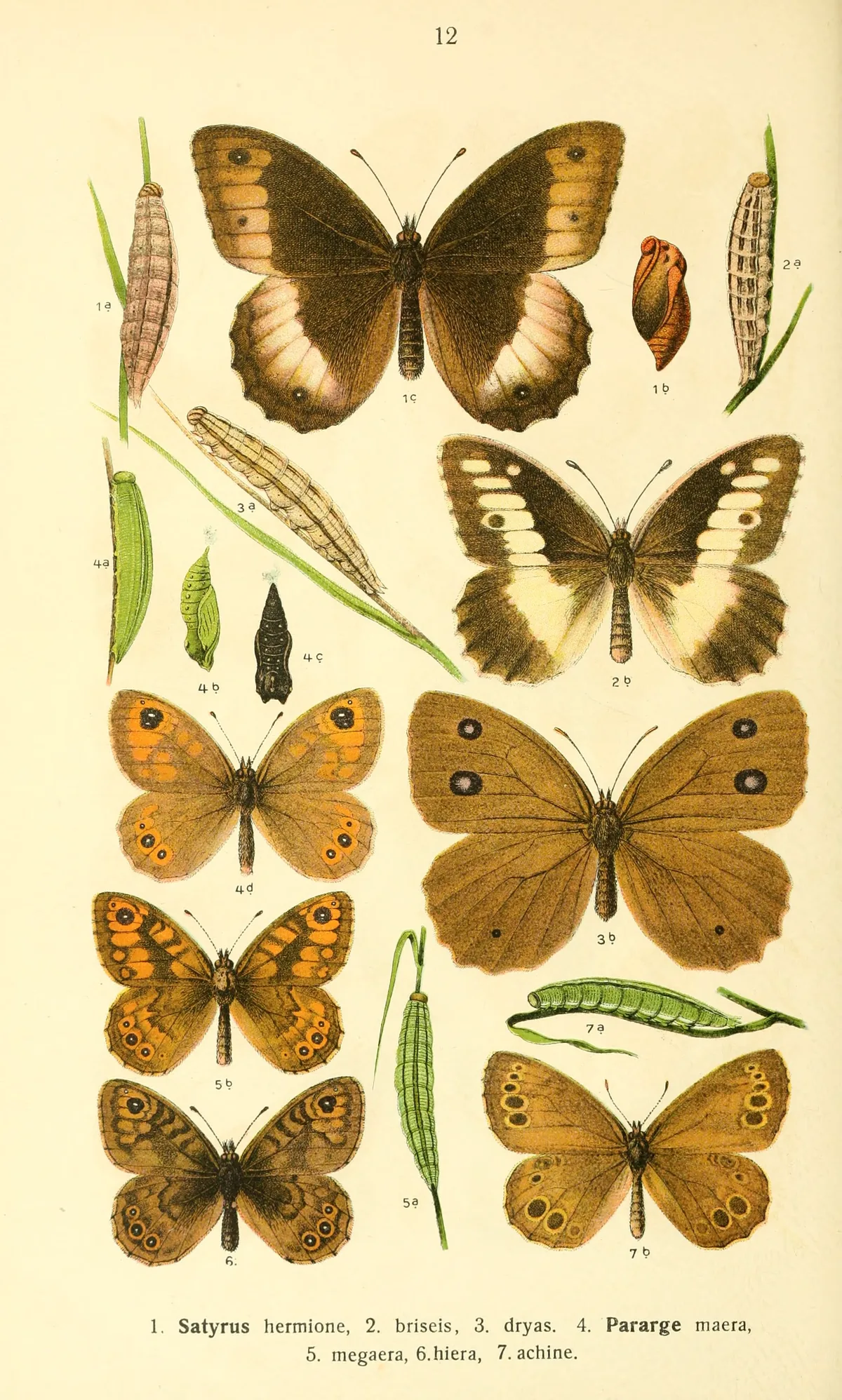
The Wall in The Quiet Cabinet is figure 5b of this plate. On its Field Guide page it rests above a warm, stony bank with cock's-foot.
In The Quiet Cabinet
It's one of the thirteen species of the Night Wing, the game's fourth chapter, part of the Butterfly Collection. When its case is completed, a flute joins the plate's music.
More from the journal

Black-veined White: the butterfly Britain lost
A large white butterfly with black veins, lost from Britain around 1925 for reasons still unknown. Its story, its caterpillars' silk nests, its strange female.

Broad-bordered Yellow Underwing: orange hidden beneath
A brown late-summer moth that hides bright orange hindwings with a broad black border, showing them only in flight. How to know it, and its many forms.

Buff-tip moth: the moth that looks like a broken twig
A moth that rests looking just like a snapped birch twig, whose yellow-and-black caterpillars feed in crowds and strip branches bare. How to know the Buff-tip.