



 The Quiet Cabinet

Thysania agrippina
White Witch moth: the widest wings of any moth
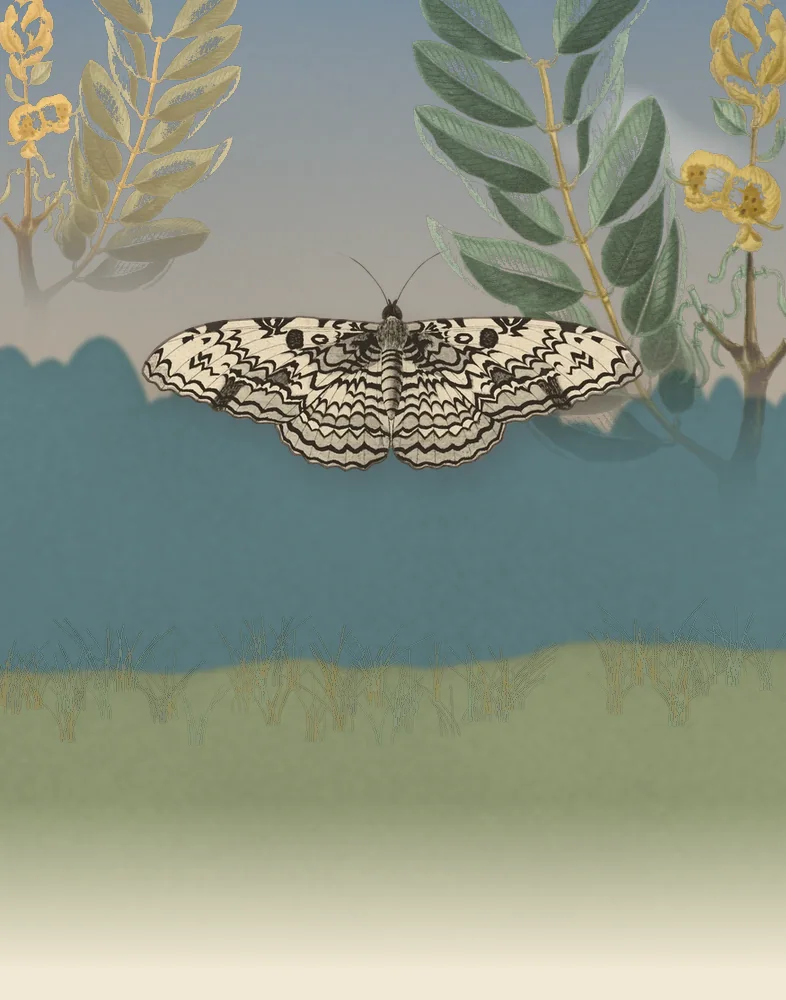
No moth in the world has wider wings than the White Witch. A specimen from Brazil measured almost 30 centimetres from tip to tip, and seems to hold the record. (The Atlas moth, in the same chapter of the game, and the Hercules moth have a greater wing area, but not a wider span.)
How to recognise it
- Size: enormous, with a wingspan of up to about 30 centimetres, and a small body for wings so large.
- Colour: pale, patterned with fine dark lines, as Cramer's figure shows.
- Names: the White Witch, the Ghost Moth, the Great Grey Witch or the Great Owlet Moth. One story has it that early naturalists, shooting birds and bats, found their pellets often failed to bring it down, and called it the "unkillable witch".
Where it lives
It lives from Mexico south to Uruguay, and now and then strays as far north as Texas. Like its relatives, it is thought to make long migratory flights.
A mystery for three centuries
The White Witch has been known for over 300 years. Maria Sibylla Merian painted it in 1705, in her book of the insects of Surinam, Metamorphosis insectorum Surinamensium, though the caterpillar she drew with it belongs to a hawk-moth. Pieter Cramer gave it its scientific name in 1776, in the book its plate comes from.
Yet its own caterpillar remained unknown until 2025, when one was found in Panama, identified through the iNaturalist community and reared to an adult. Its food plants are still not confirmed; from its relatives, they are thought to be woody plants of the pea family, perhaps sennas or cassias.
The plate it comes from
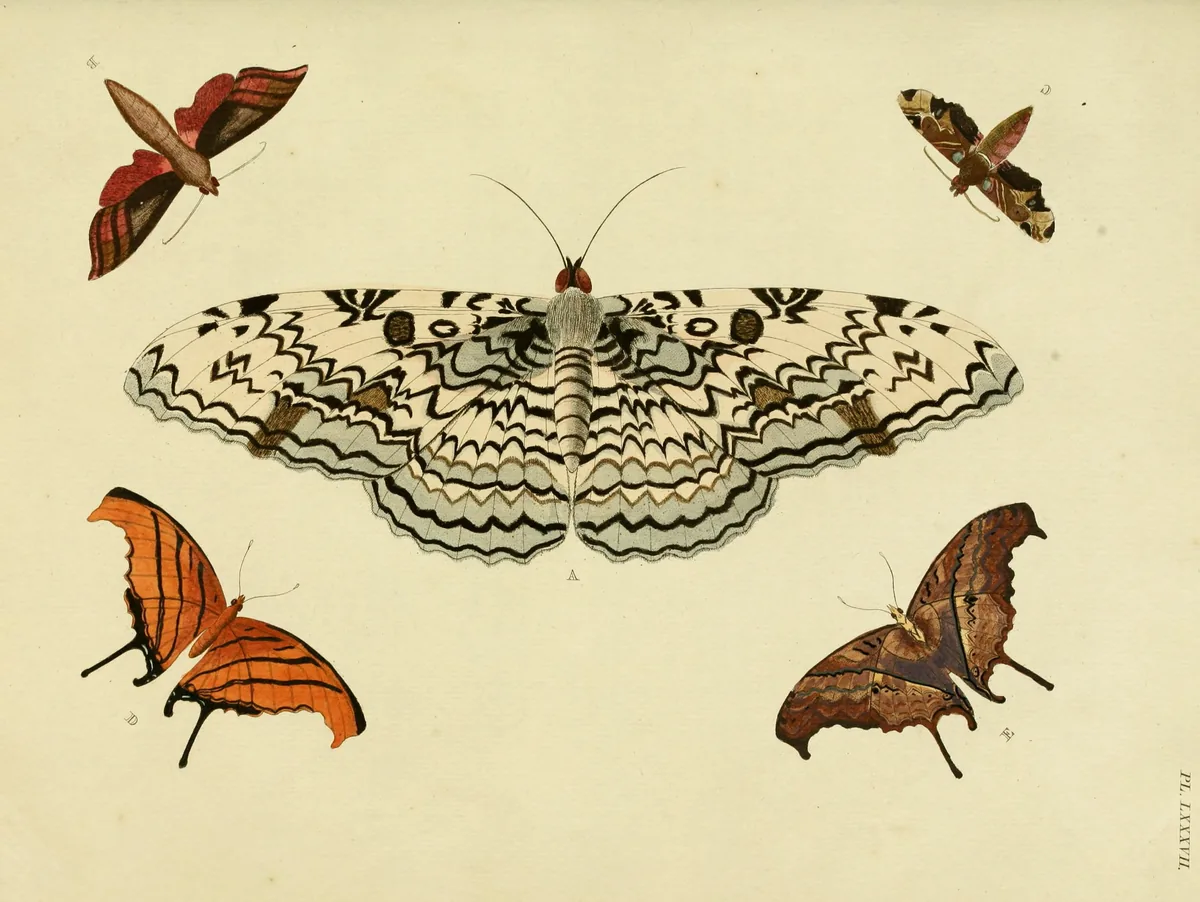
The White Witch in The Quiet Cabinet is Cramer's figure A, engraved and coloured by hand in Amsterdam in the 1770s. Its Field Guide page has no caterpillar, both because Cramer drew adults only and because, until 2025, no one knew what it looked like. It flies at dusk above candle bush, a senna of tropical America, drawn from Descourtilz's Flore médicale des Antilles (1821–1829).
In The Quiet Cabinet
It's one of the thirteen species of the Curiosity Cabinet, the game's last chapter, part of the Butterfly Collection. When its case is completed, a celesta joins the plate's music.
Sources
- Wikipedia, Thysania agrippina
More from the journal

Black-veined White: the butterfly Britain lost
A large white butterfly with black veins, lost from Britain around 1925 for reasons still unknown. Its story, its caterpillars' silk nests, its strange female.

Broad-bordered Yellow Underwing: orange hidden beneath
A brown late-summer moth that hides bright orange hindwings with a broad black border, showing them only in flight. How to know it, and its many forms.

Buff-tip moth: the moth that looks like a broken twig
A moth that rests looking just like a snapped birch twig, whose yellow-and-black caterpillars feed in crowds and strip branches bare. How to know the Buff-tip.