



 The Quiet Cabinet

Butterfly bush (buddleia): the butterflies it brings
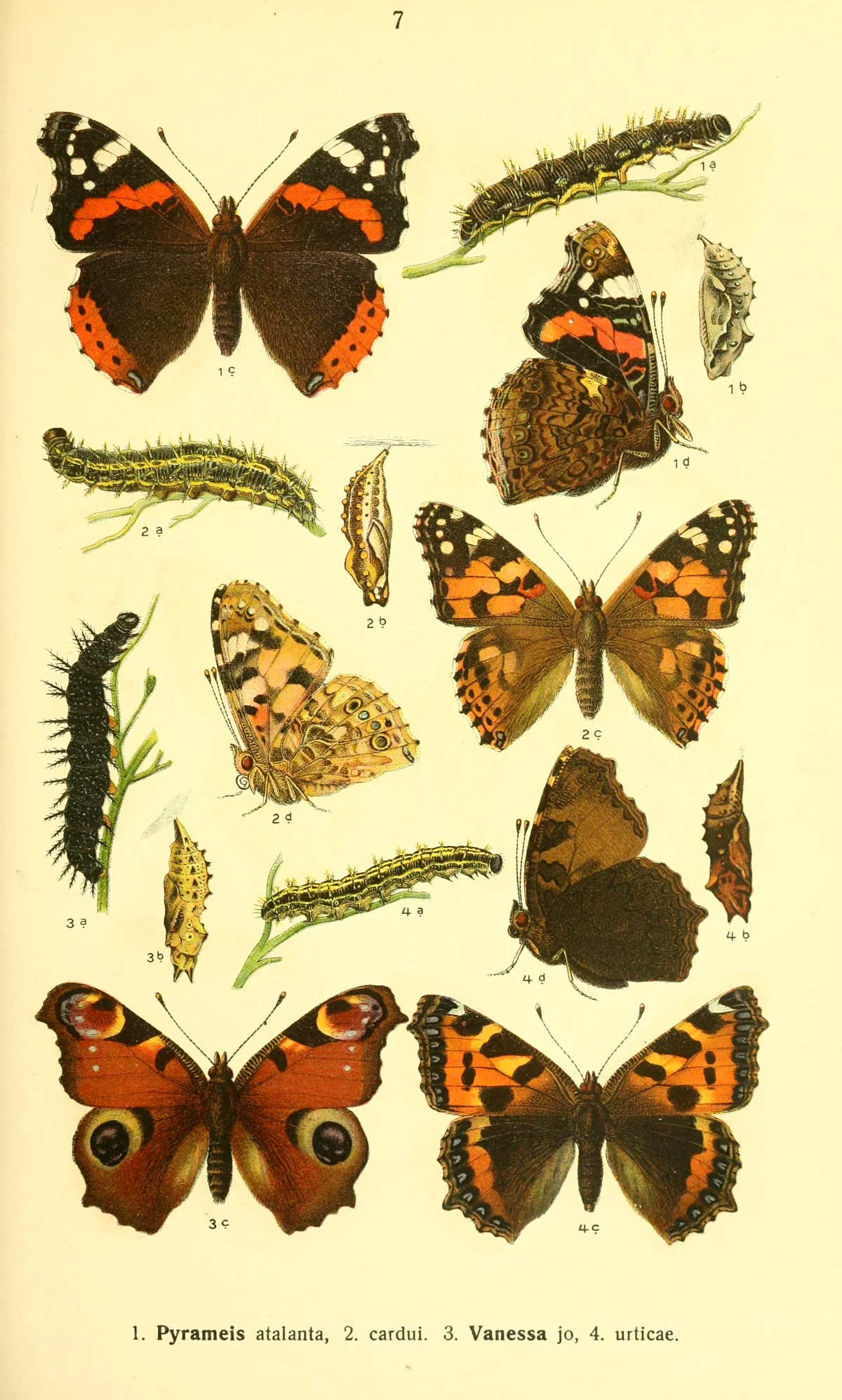
On a warm afternoon in late summer, a buddleia in full flower can be covered in butterflies: Red Admirals, Peacocks, Small Tortoiseshells, several at once, crowding its purple spikes. No wonder it's called the butterfly bush. The plate above, from a German butterfly book of 1913, shows four of its most faithful visitors together.
What buddleia is
The common buddleia, Buddleja davidii, comes from China. Its genus is named after an English botanist, the Reverend Adam Buddle; the species after Father Armand David, the French missionary and naturalist who was the first European to report it. It reached European gardens in the 1890s.
- Size: a vigorous shrub, up to about 5 metres tall.
- Flowers: long spikes of small flowers, lilac to purple, sometimes white, and honey-scented.
- When: summer into early autumn. Each plant flowers for about six weeks; cutting off the spent spikes brings more, though smaller.
The butterflies you'll see on it
Buddleia's nectar draws many butterflies. In Britain these are the ones you're most likely to see, each with a page in the Journal:
- Red Admiral: velvety black with red bands; feeds at buddleia in summer, and at ivy flowers in autumn.
- Peacock: four great eyespots; a familiar sight on buddleia in late summer, feeding up before its winter sleep.
- Small Tortoiseshell: orange, black and yellow; the garden butterfly of August.
- Painted Lady: the migrant from the desert's edge; in a good year, its late-summer children are everywhere.
- Dark Green Fritillary: a big orange fritillary of the downs, which takes buddleia too where it grows near.
Moths visit too. In North America the Monarch is a famous visitor.
To see which butterflies fly in which month, there's a month by month guide.
The catch
Buddleia is a fine source of nectar, but it is not the whole answer, for two reasons.
It feeds butterflies, never caterpillars. No caterpillar eats buddleia. A garden of buddleia alone feeds the adults passing through, but none of them can raise a family there. For that they need their own food plants: nettles for the Peacock, Small Tortoiseshell and Red Admiral, thistles for the Painted Lady, and so on. There's a guide to them: caterpillars, by what they eat.
It spreads. Its tiny seeds blow on the wind, and buddleia has run wild far beyond gardens: along railway lines, on waste ground and derelict sites, and after the Second World War on so many ruined city sites that it was called "the bomb site plant". It is counted as an invasive plant in the UK, Ireland and New Zealand, and in some places it may out-compete the very plants that caterpillars need.
So if you grow it, cut off the flower spikes as soon as they fade, before they set seed; that also brings more flowers. Some newer varieties set little or no seed.
A garden for the whole life of a butterfly
Butterfly Conservation says a well thought-out garden can draw more than 20 kinds of butterfly. Buddleia can be part of it, alongside:
- Flowers through the seasons, for nectar from spring to autumn, with ivy for the last butterflies of the year. (More in what do butterflies eat?)
- A sunny corner of nettles, left uncut, for the caterpillars of the Peacock, the Small Tortoiseshell and the Red Admiral.
- A few windfall apples or plums left under a tree in autumn, which Red Admirals and Commas love.
Sources
- Wikipedia, Buddleja davidii
- Butterfly Conservation, Gardening
- Each butterfly's page in the Journal, linked above, which names its own sources
More from the journal
Butterfly or moth? How to tell the difference
Antennae, bodies, wings at rest and the time of day: how to tell a butterfly from a moth, and the many moths that break the rules. With pictures from old plates.
What do butterflies eat? Nectar, fruit, mud and nothing
Butterflies drink, never chew: nectar, rotting fruit, honeydew, sap and salts from mud, while some moths never eat at all. What butterflies and caterpillars eat.
Relaxing puzzle games with no timer: the 7 rules behind ours
What makes a puzzle game truly relaxing? No timers, no fail states, no streaks. The seven-rule calm rulebook The Quiet Cabinet is built on.