



 The Quiet Cabinet

A guide
Caterpillars, by what they eat
Most caterpillars eat only one plant, or a few related ones, so the plant you find a caterpillar on is the best clue to what it will become. Here are the caterpillars of The Quiet Cabinet's Field Guide, each beside its chrysalis or cocoon as the old plates drew them, grouped by what they eat. Each links to the page of the butterfly or moth it becomes.
On nettles
A sunny patch of nettles is a nursery for several of Britain's best-known butterflies.
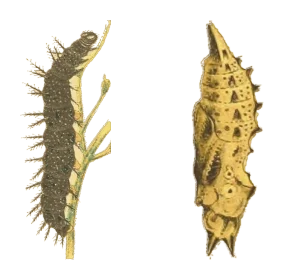
Peacock
Aglais io
Jet black and spiny, living together in a web near the top of the nettles.
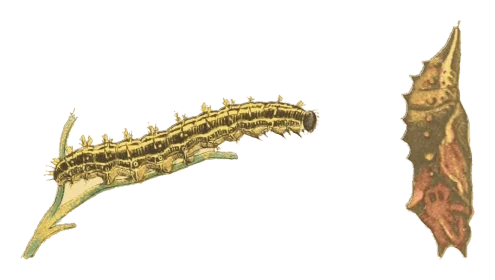
Small Tortoiseshell
Aglais urticae
Dark and spiny, in silk tents that they move on from as they grow.
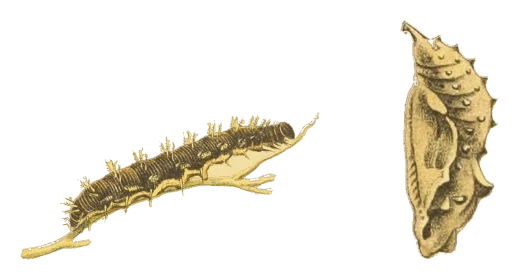
Red Admiral
Vanessa atalanta
On common nettle above all; also small nettle and hop.
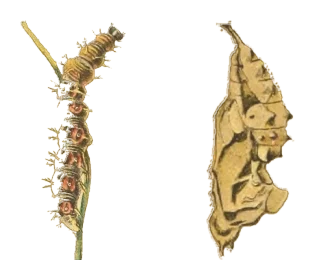
Comma
Polygonia c-album
Brown and white, like a bird dropping; nettle, hop, elm and willow.
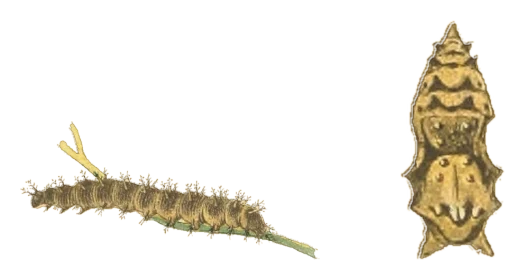
Map
Araschnia levana
Black and spiny, feeding together on nettles in damp, shady places (Europe).
On grasses
The browns and the skippers; many feed at night and hide in the tussocks by day.
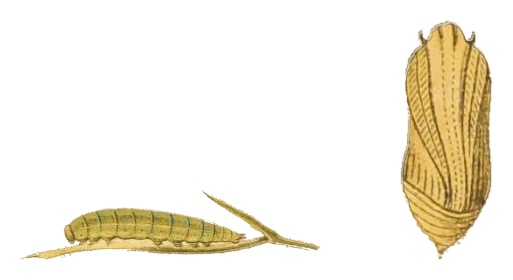
Marbled White
Melanargia galathea
Green or brown; hibernates as soon as it hatches, before eating.
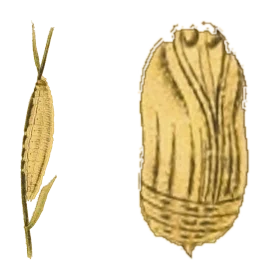
Ringlet
Aphantopus hyperantus
Feeds at night on coarse grasses such as cock's-foot.
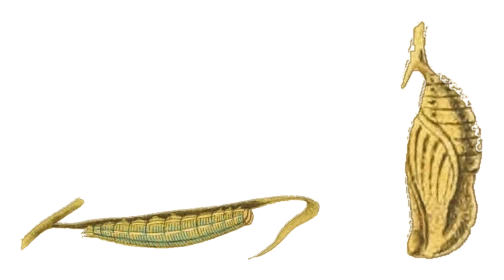
Gatekeeper
Pyronia tithonus
Light brown or green, on fine grasses; feeds at night in spring.
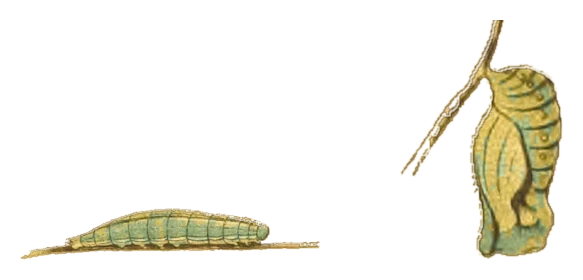
Small Heath
Coenonympha pamphilus
Slender and green, on fescues, bents and meadow-grasses.
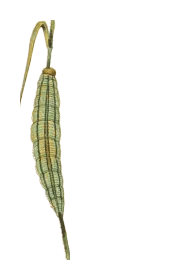
Wall
Lasiommata megera
On cock's-foot and other grasses; feeds mostly at night.

Large Skipper
Ochlodes sylvanus
Lives in a tube of grass blade it spins itself; flicks its droppings away.
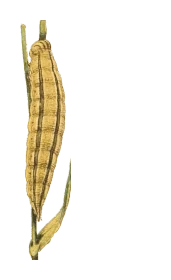
Great Banded Grayling
Brintesia circe
Yellowish brown, on grasses; winters in a tussock (Europe).
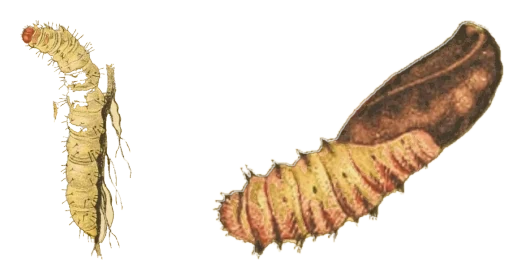
Ghost Moth
Hepialus humuli
Underground, on the roots of grasses and low plants, for up to two years.
On low plants of meadow and downland
Trefoils, vetches, clovers, sorrels and the flowers of the meadow.
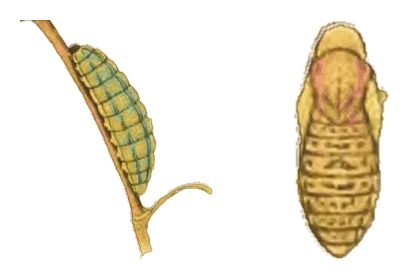
Common Blue
Polyommatus icarus
Small and green, on bird's-foot trefoil; tended by ants.
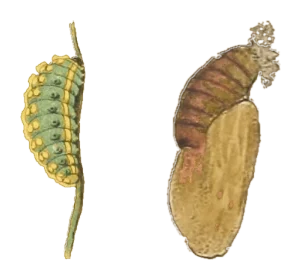
Chalkhill Blue
Polyommatus coridon
On horseshoe vetch only; feeds at night, tended by ants.
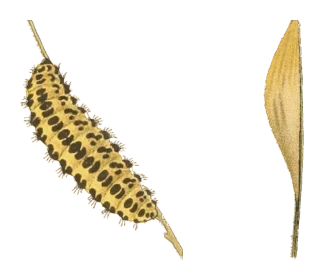
Six-spot Burnet
Zygaena filipendulae
Plump, pale green with black spots, on bird's-foot trefoil.
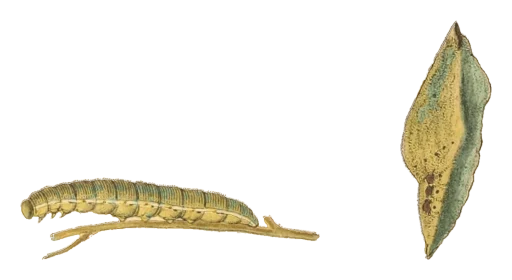
Clouded Yellow
Colias croceus
Green with a yellow and orange-red stripe, on clovers and lucerne.
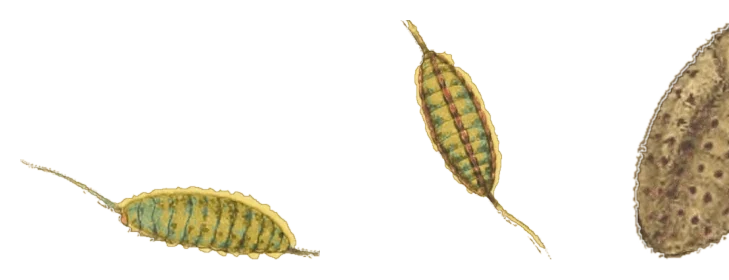
Small Copper
Lycaena phlaeas
Green, sometimes striped red, on common and sheep's sorrel.
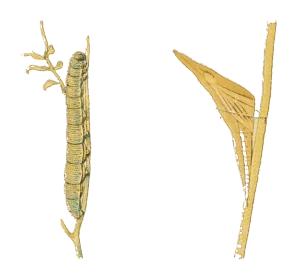
Orange-tip
Anthocharis cardamines
Slender and green, lying along the seed pods of cuckooflower.
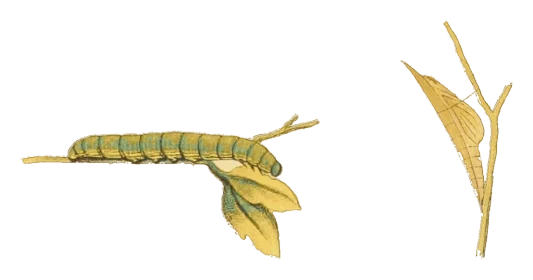
Wood White
Leptidea sinapis
Slim and green, on meadow vetchling and other vetches.
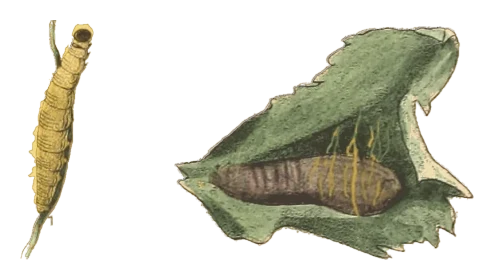
Grizzled Skipper
Pyrgus malvae
In a folded leaf of wild strawberry, agrimony or cinquefoil.
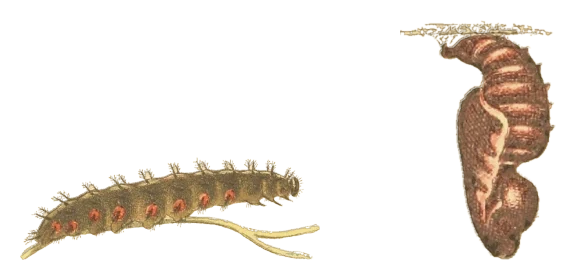
Dark Green Fritillary
Speyeria aglaja
Black and spiny with red spots, on violets.
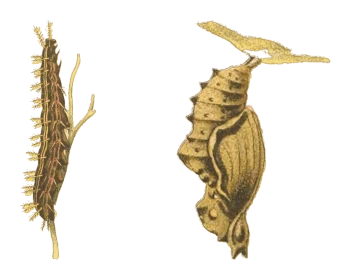
Silver-washed Fritillary
Argynnis paphia
On dog-violets, after a winter waiting in the bark of a tree above them.
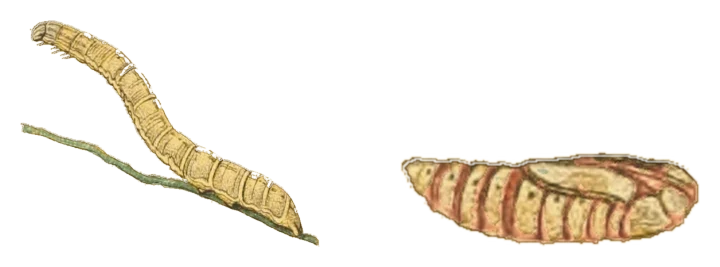
Mother Shipton
Euclidia mi
On clovers, black medick and grasses.
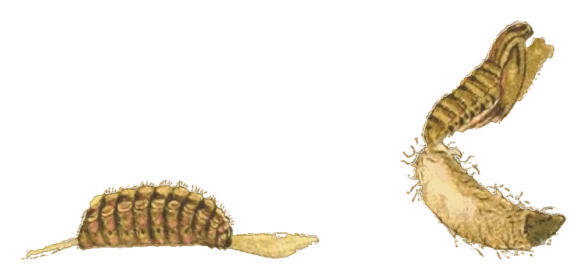
Scarce Forester
Jordanita globulariae
Mines inside the leaves of knapweed at first.
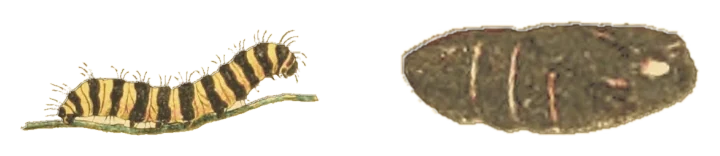
Cinnabar
Tyria jacobaeae
Hooped in yellow and black, crowding on ragwort.
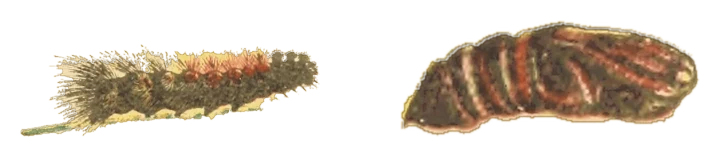
Wood Tiger
Arctia plantaginis
On plantains and other low plants; spends the winter half-grown.
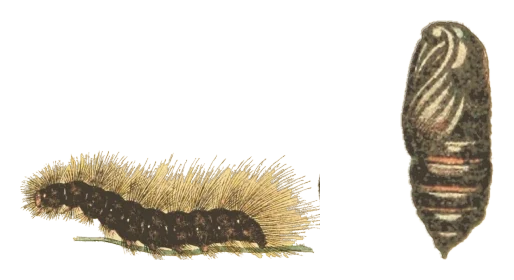
Cream-spot Tiger
Arctia villica
Hairy and dark, on dead-nettles and dandelions.
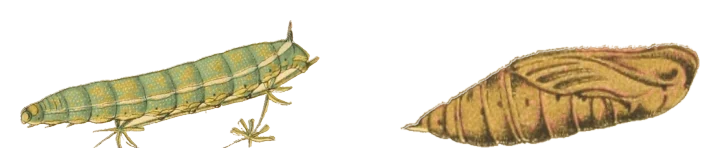
Hummingbird Hawk-moth
Macroglossum stellatarum
On lady's and hedge bedstraw, June to October.
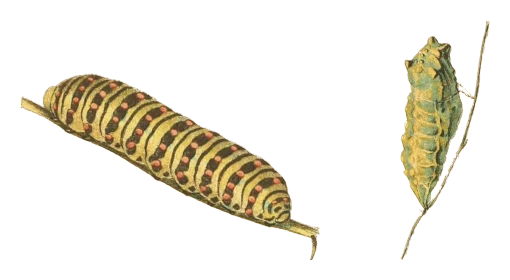
Swallowtail
Papilio machaon
Green banded with black and orange, on milk-parsley in the Broads.
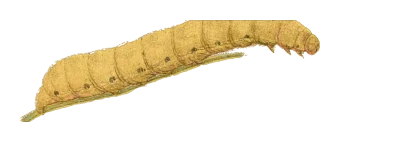
Broad-bordered Yellow Underwing
Noctua fimbriata
Reddish ochre with brown spots, on many low plants.
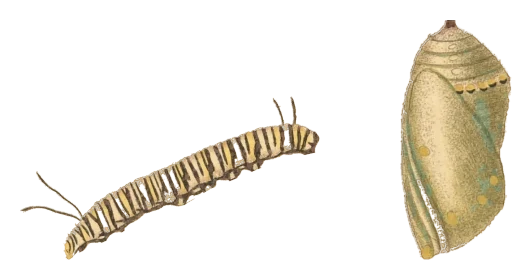
Monarch
Danaus plexippus
Banded white, yellow and black, on milkweed only (North America).
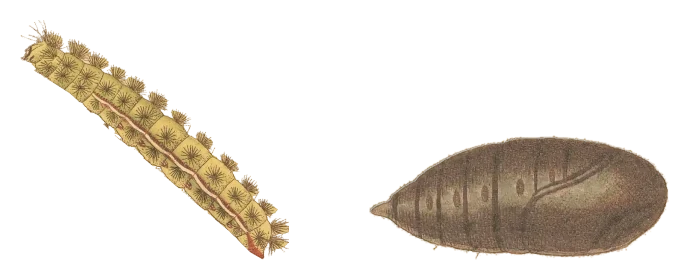
Io Moth
Automeris io
Green with a red and white stripe; its spines sting (North America).
On trees and shrubs
Oaks and willows, birch and blackthorn, holly, honeysuckle and the garden hedge.
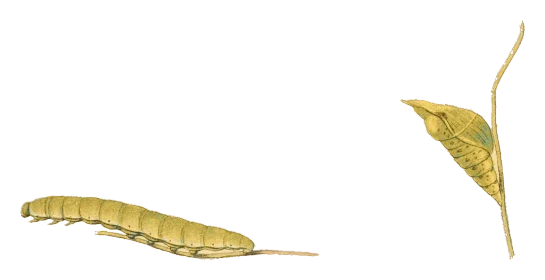
Brimstone
Gonepteryx rhamni
Green and hidden along a leaf's midrib, on buckthorn and alder buckthorn.
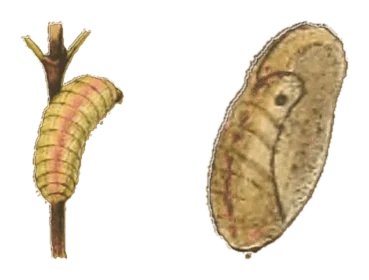
Holly Blue
Celastrina argiolus
Green, in holly buds in spring and on ivy in summer.
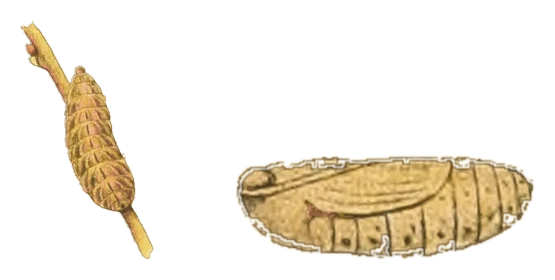
Purple Hairstreak
Favonius quercus
In oak buds, then under a silk web; feeds at night.
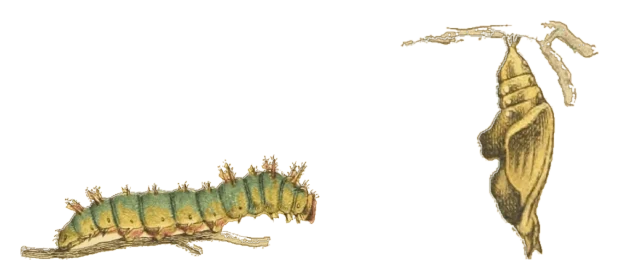
White Admiral
Limenitis camilla
Green when grown, on honeysuckle in the shade.
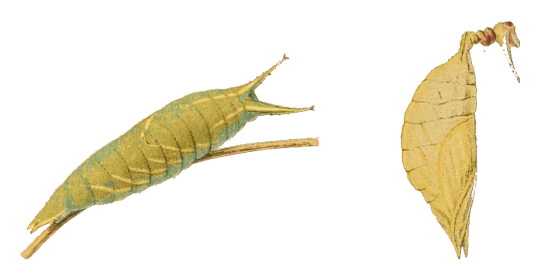
Purple Emperor
Apatura iris
Horned, with stripes like a leaf's veins, on goat willow.
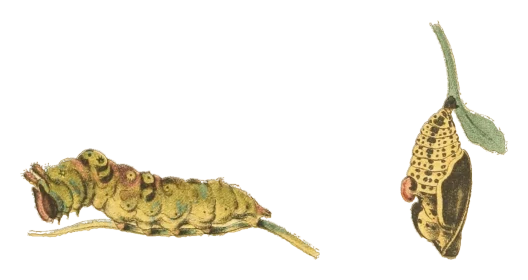
Poplar Admiral
Limenitis populi
On aspen, resting on a leaf's bare midrib (Europe).
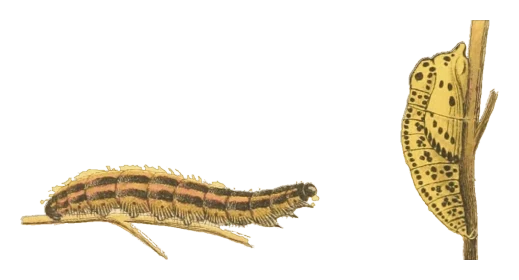
Black-veined White
Aporia crataegi
In a silk nest on blackthorn and hawthorn through the winter.
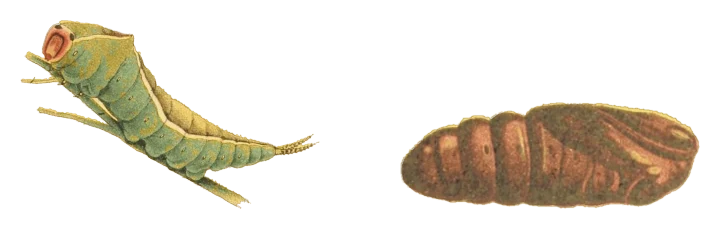
Puss Moth
Cerura vinula
Green, with a red face and two whip-like tails; on aspen, poplar and willow.

Buff-tip
Phalera bucephala
Yellow and black, in crowds that can strip a branch bare.
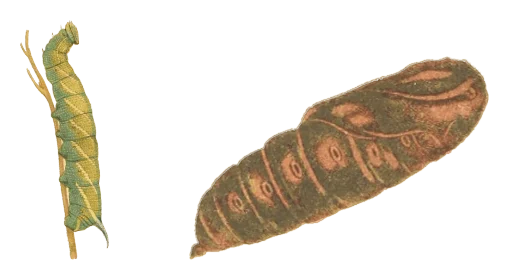
Eyed Hawk-moth
Smerinthus ocellata
Pale green with white stripes and a blue-grey horn, on sallow and apple.
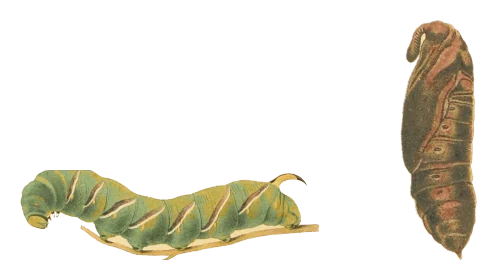
Privet Hawk-moth
Sphinx ligustri
Bright green with lilac stripes and a black horn, on privet, lilac and ash.
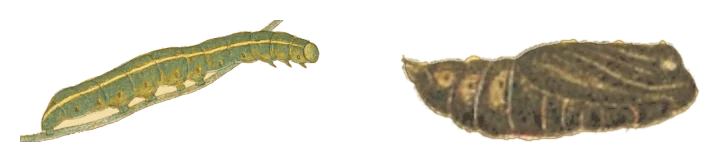
Herald
Scoliopteryx libatrix
Bright green with thin yellow lines, on willows and poplars.
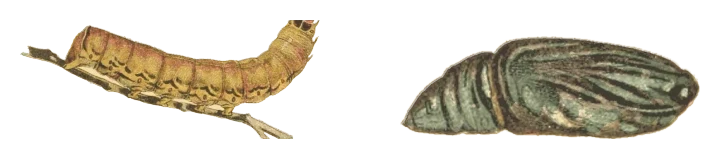
Old Lady
Mormo maura
Plump and pale, on blackthorn and other shrubs in spring.
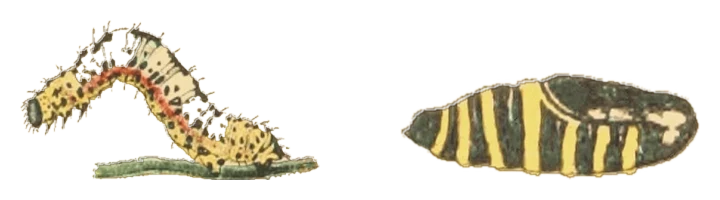
Magpie
Abraxas grossulariata
Coloured like the moth, on gooseberry and currant.
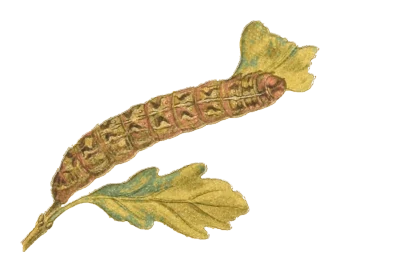
Merveille du Jour
Griposia aprilina
Hidden inside opening oak buds when young.
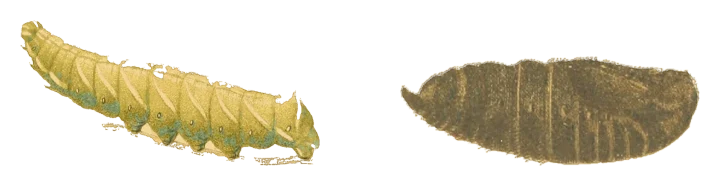
Kentish Glory
Endromis versicolora
Green with paler stripes, on birch.
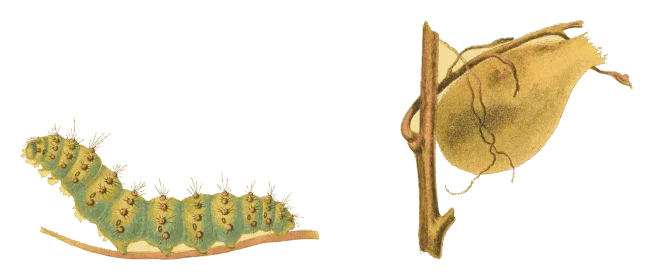
Emperor Moth
Saturnia pavonia
Green with black hoops set with yellow spots, on heather.
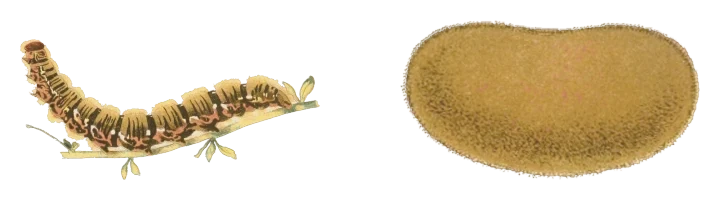
Oak Eggar
Lasiocampa quercus
Big and furry, on heather, bramble and many shrubs.
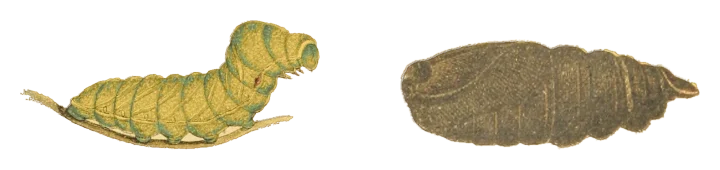
Tau Emperor
Aglia tau
On beech above all (Europe).
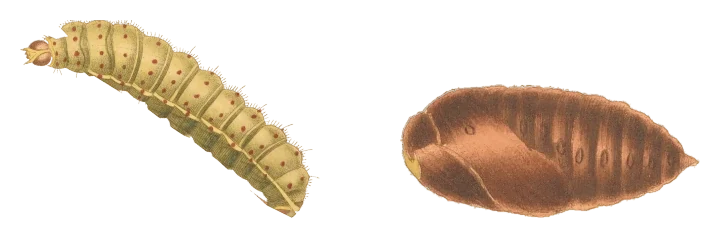
Luna Moth
Actias luna
Plump and green, on walnut, hickory and sweet gum (North America).
Every line here comes from the species’ own page in the Journal, which names its sources. The pictures are from old natural history plates, now in the public domain: the plates themselves are free to download, and each butterfly is a colouring page too.