



 The Quiet Cabinet

A guide
Moths that fly by day
Most moths fly at night, but not all. Some fly in full sunshine, often brightly coloured to warn birds that they taste bad; in others only the males fly by day, searching for the females, which wait for dusk. Here are the day-flying moths of The Quiet Cabinet's Field Guide, each with a page of its own in the Journal.
Out in the sunshine
Moths that fly by day, both sexes, often at flowers.
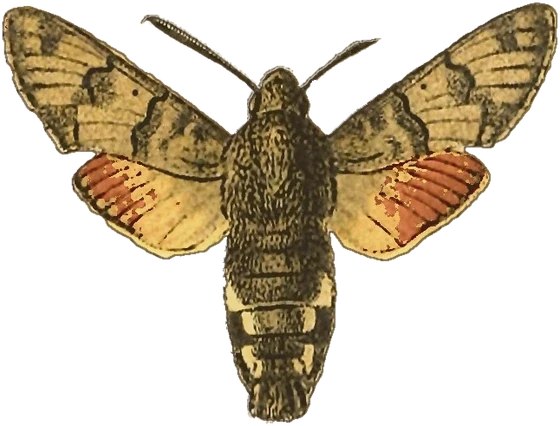
Hummingbird Hawk-moth
Macroglossum stellatarum
Hovers at flowers like a hummingbird, wings humming; May to September.
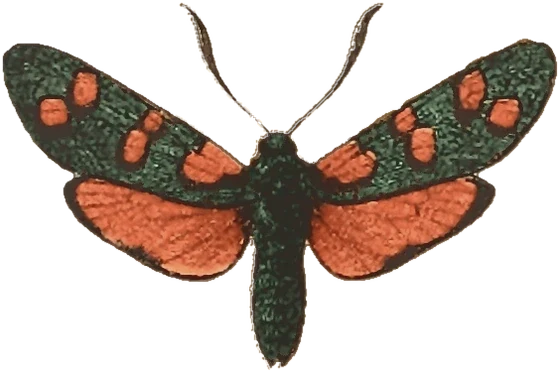
Six-spot Burnet
Zygaena filipendulae
Glossy black-green with six red spots; slow and buzzing, June to August.
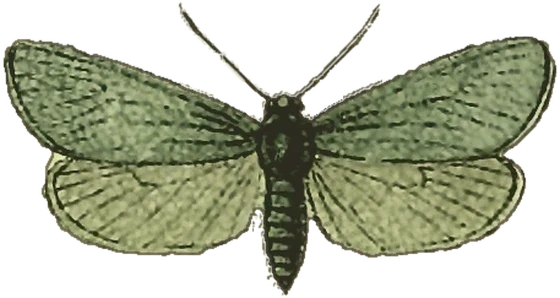
Scarce Forester
Jordanita globulariae
Shining metallic green, on a few southern chalk downs in June.
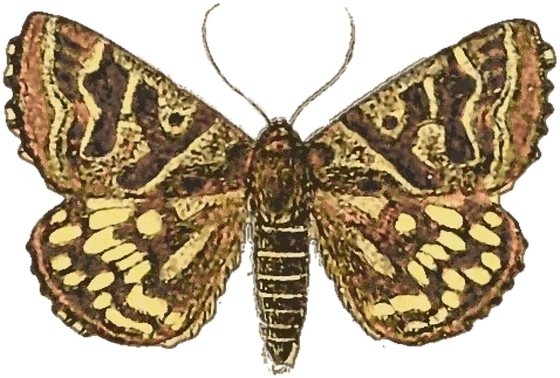
Mother Shipton
Euclidia mi
A witch's face on each wing; short quick flights, May and June.
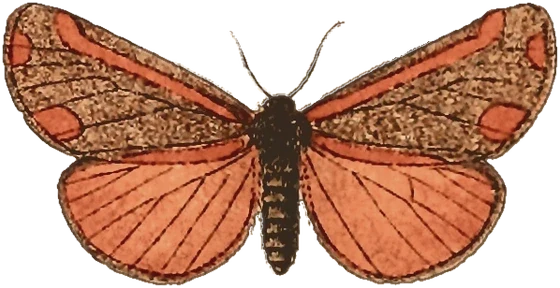
Cinnabar
Tyria jacobaeae
Black and crimson; easily flushed from long grass by day, flies at night too.
Males by day, females at dusk
The males search for the females in daylight; the females fly from dusk.
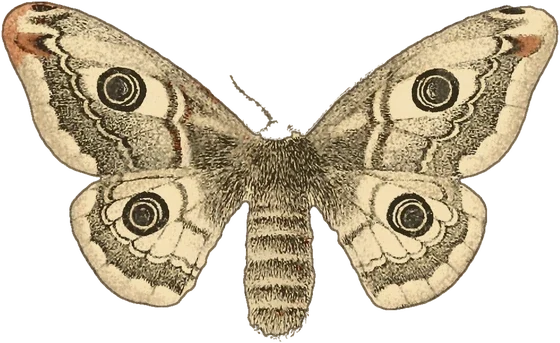
Emperor Moth
Saturnia pavonia
Britain's only silk moth; the males race over the heather in spring.
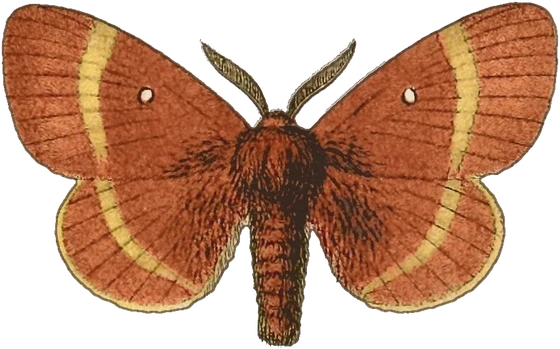
Oak Eggar
Lasiocampa quercus
Britain's largest day-flying moth; the red-brown males fly fast and wild.
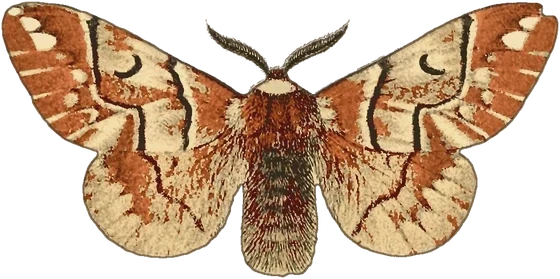
Kentish Glory
Endromis versicolora
A spring moth of Highland birch woods; the males fly in sun and cloud.
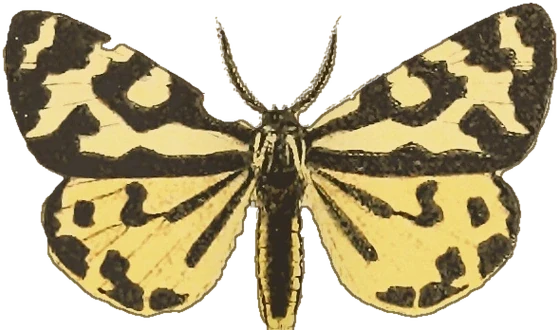
Wood Tiger
Arctia plantaginis
Black and cream; the males zigzag over heaths, the red-winged females wait.
At dusk
Flying in the last of the light.
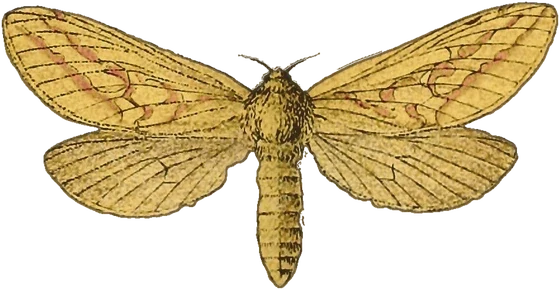
Every line here comes from the species’ own page in the Journal, which names its sources. The pictures are from old natural history plates, now in the public domain: the plates themselves are free to download, and each butterfly is a colouring page too.